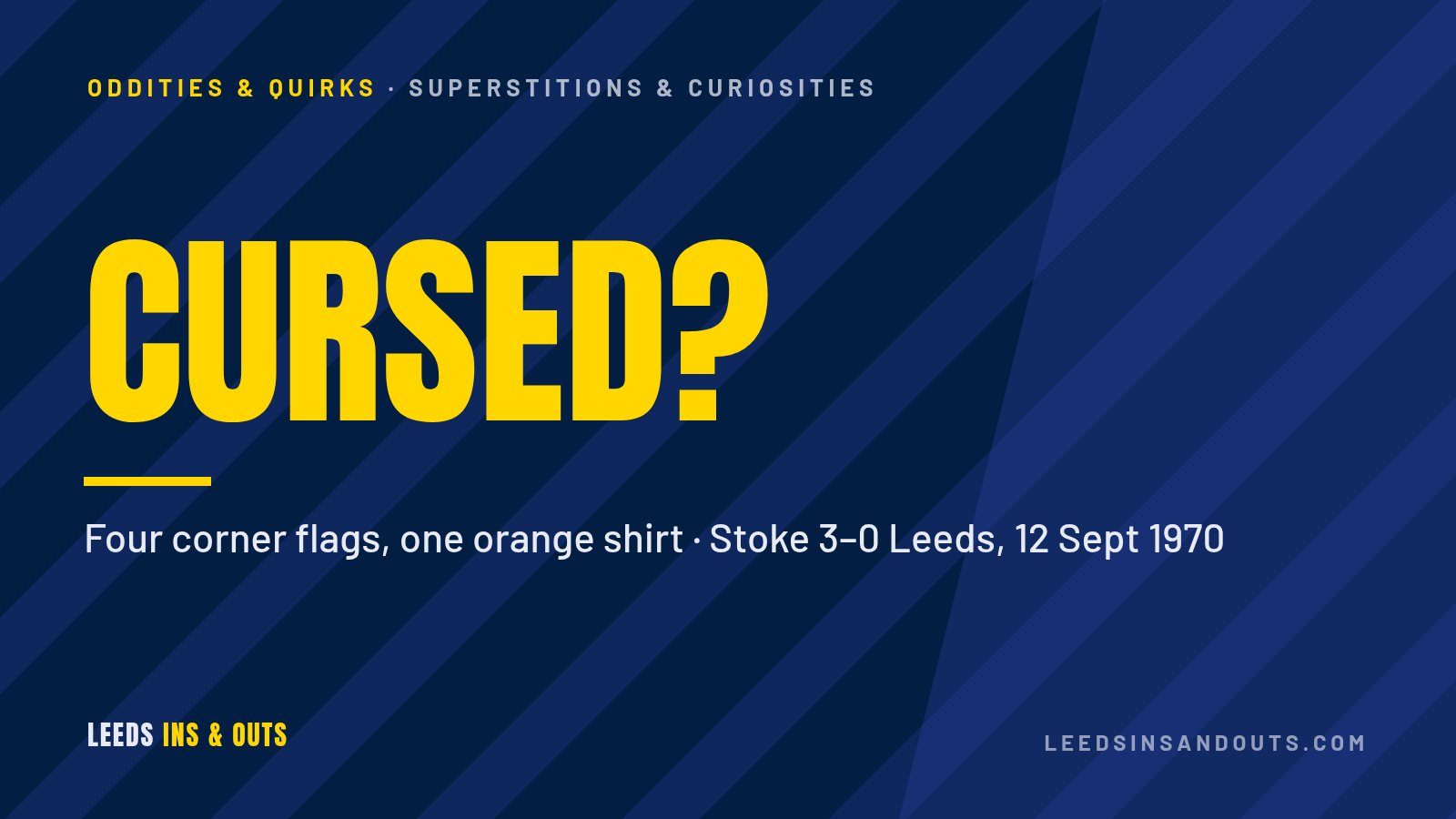
Don Revie’s Leeds had their lucky suits, their rituals and, if the folklore is to be believed, a fortune-teller summoned to Elland Road. Then there was the orange kit that appeared once, lost 3-0 and was supposedly never seen again.
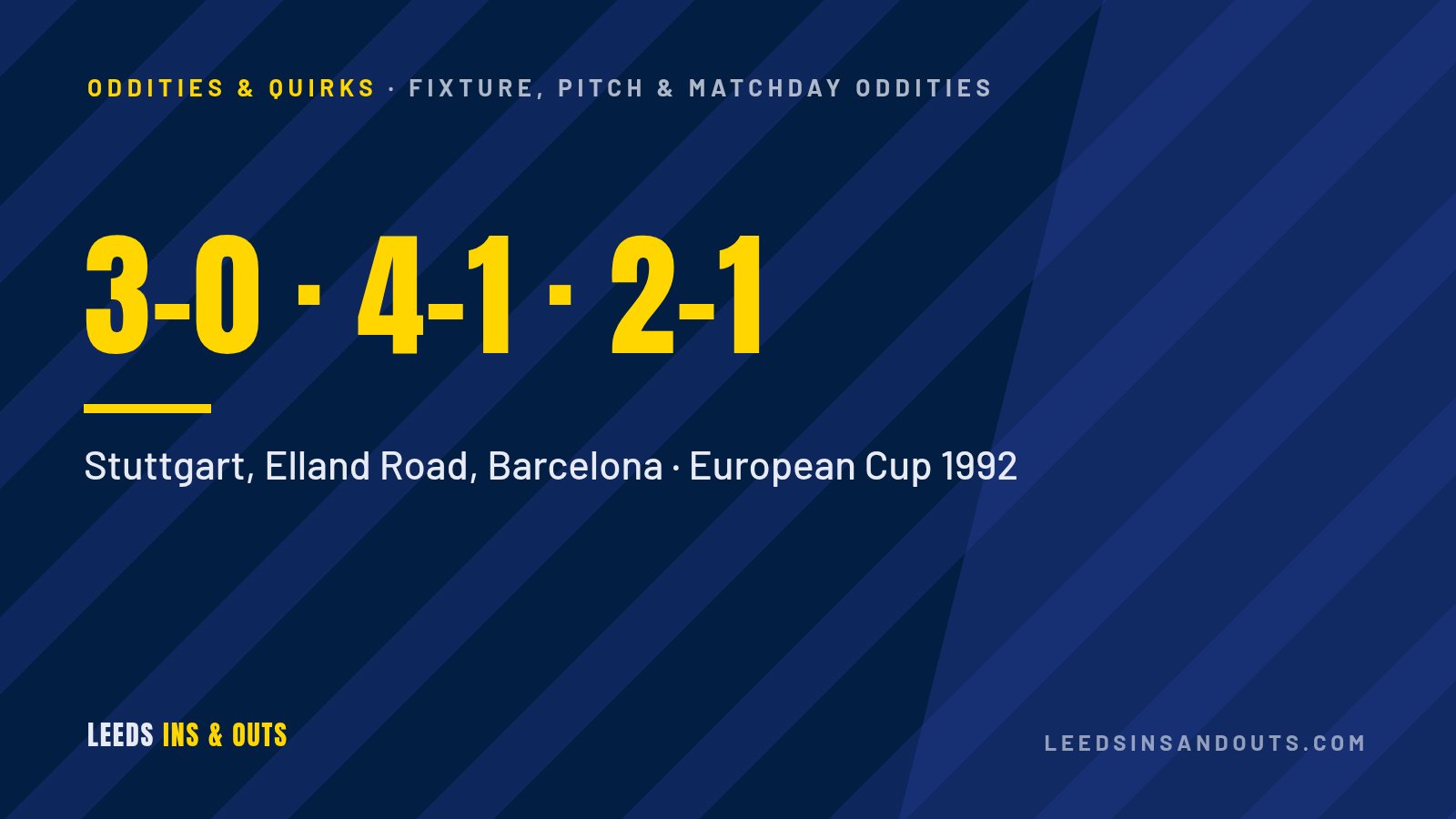
Leeds United were eliminated by Stuttgart, reinstated by UEFA and sent to Barcelona for a third match. It was a European Cup tie that needed three games, a rulebook and a very late substitution to reach its conclusion.
Jean-Kévin Augustin played 48 minutes for Leeds United, never started a match and left before promotion was secured. The contractual fallout lasted far longer than his Elland Road career.
Paul Madeley was not simply a defender who could fill in elsewhere. Across 17 years at Elland Road he wore every shirt number from 2 to 12 and played in every outfield position.
The all-white Leeds strip is usually presented as one of Don Revie’s great acts of reinvention. The story is slightly more interesting: white had already appeared as a change kit before Revie made it the club’s regular identity.
The Peacocks nickname has nothing to do with the modern badge, a flamboyant team or a marketing brainstorm. Its roots are much more local: a pub, a patch of ground and the sporting life of Elland Road before Leeds United existed.
Massimo Cellino’s explanation for appointing Darko Milanič included a line that quickly became part of Leeds folklore. The new coach had a CV; his chairman, however, chose to mention his appearance.
Brian McDermott was told he had been dismissed by telephone, missed Leeds’ 5-1 win over Huddersfield and then discovered on his iPad that the club still regarded him as manager. The ownership battle had produced a story stranger than any match report.
Leeds began the first Premier League season as champions of England. They finished 17th, and went through the entire 42-match league campaign without winning away from Elland Road.
The Boxing Day scoreline is familiar enough in Leeds folklore: a 6-3 defeat at Burnley in 1925. The goalkeeper who played that afternoon is less familiar — and the name in the records is Richard Thornton, not Roy Davies.
A broken hand, an unavailable senior goalkeeper and a seventeen-year-old substitute turned a routine UEFA Cup tie into one of Leeds United’s most unusual European nights.
A compulsory £5 meal voucher, a threatened television blackout and a chairman who admitted that a ticket surcharge was linked to criticism from supporters: Leeds’ 2015 matchdays were never short of side-plots.
The 1973 Leeds–Admiral deal did more than give supporters a new away shirt. It helped establish the commercial model of branded, copyrighted club kits — and turned a football strip into something fans could buy.
Leeds have worn a civic coat of arms, an owl, a slanted monogram, a smiley face, a peacock and a Yorkshire rose. The club’s badge history is a tour of changing identity — and one centenary design that supporters rejected before it reached a shirt.
One of Britain’s best-known indie bands borrowed its name from a South African football club. The connection runs through Lucas Radebe, a Leeds captain whose former club inspired a band name that kept an extra letter.
Leeds’ unbeaten run under Don Revie was not merely a good season’s form. It stretched across campaigns, included 17 away matches, and remains one of the club’s defining statistical sequences.
BRIDEGROOM'S TREBLE: Leeds forward Bill Poyntz married on the morning of 20 February 1922, then scored all three goals in a 3-0 win over Leicester City - just nine days after his sending-off at Bury.
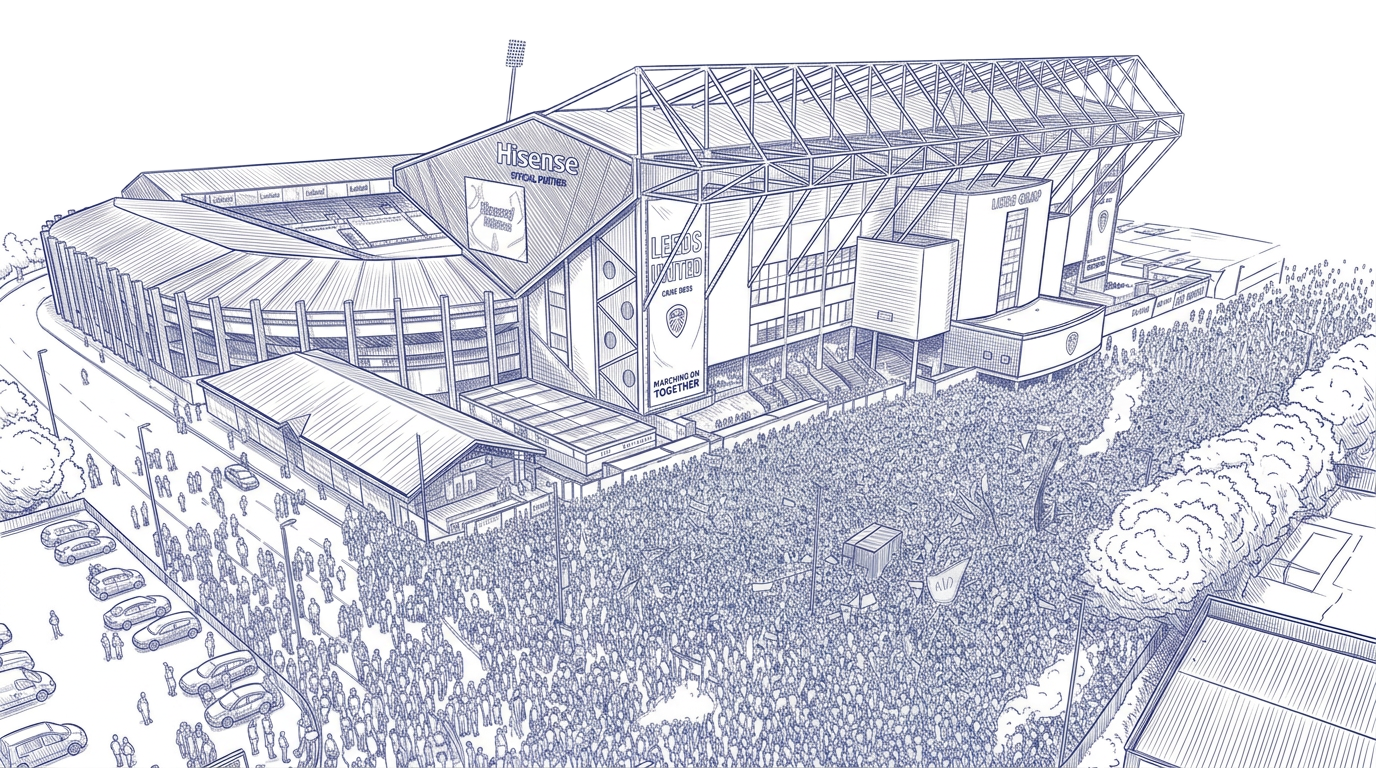
Elland Road has staged cup finals, title celebrations and European nights. It also doubled for Wembley in an Oscar-winning film, giving the stadium an unlikely brush with Hollywood.
Few players could move from the heart of defence to the point of the attack and remain world-class. John Charles made the idea look less like a compromise and more like a superpower.
Gjanni Alioski did not need to score to make himself the centre of attention. He brought a mischievous energy to Elland Road, to interviews and to every camera that came within range.
It sounds like a statistic that must exist. It doesn't. The best scoring rate in Leeds history belongs to Tom Jennings: two goals in every three games.
Leeds goalkeepers are remembered for keeping the ball out. On 24 September 2003, Paul Robinson did something more familiar to his teammates: he put it in the other net.
Leeds nicknames have rarely been subtle. Some were affectionate, some were intimidating, and some became so familiar that the player’s real name almost took second place.
Marcelo Bielsa did not respond to the Spygate controversy with a short apology and a brisk exit. He delivered a 66-minute presentation, complete with detail about how Leeds analysed their opponents.
Some Leeds careers continued in a very different spotlight after the final whistle. A handful of former players became familiar faces on television, in film and in broadcasting.
Leaving Leeds did not always mean the end of the relationship. Some players returned after a few seasons away, and a few made the club feel like a footballing home from home.
Leeds have appointed managers who knew the club from the inside. Some had captained the side, some had won trophies, and some returned to a very different club from the one they had left.
Leeds’ European history includes famous opponents and famous nights, but also one-off meetings with clubs that would be unfamiliar to many modern supporters.
Leeds’ 2014 ownership change was not a single transaction followed by a tidy new era. It was a months-long drama of dismissals, appeals, football-league approval and managerial upheaval.
Headline transfer fees rarely tell the whole story. Options, obligations, add-ons and promotion triggers can turn a temporary deal into a complicated financial commitment.