
News
Numbers 2 to 12: Paul Madeley, Leeds United’s Original Swiss Army Knife
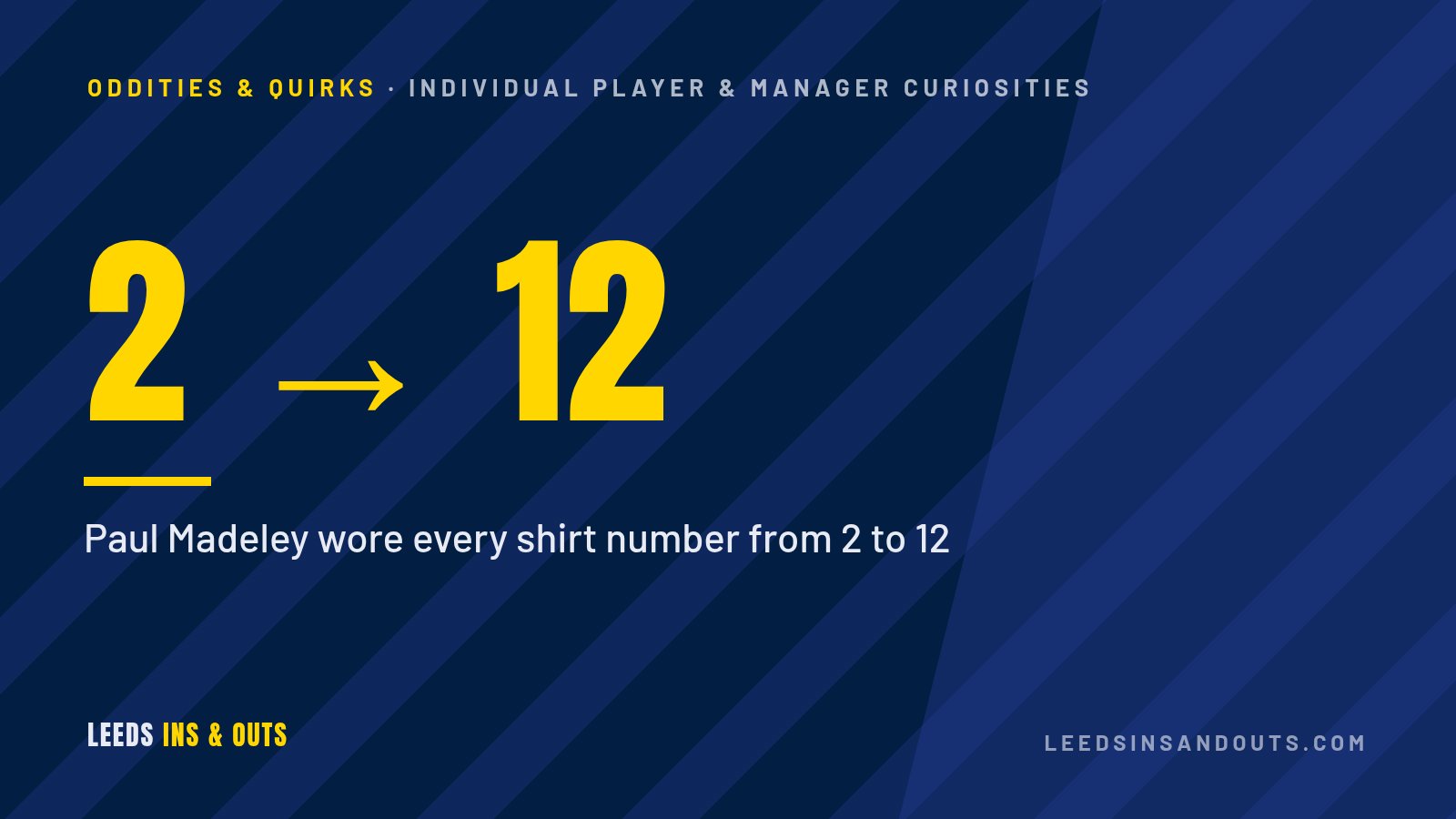
Paul Madeley was not simply a defender who could fill in elsewhere. Across 17 years at Elland Road he wore every shirt number from 2 to 12 and played in every outfield position.
The man who could solve almost any team-sheet problem
Every manager wants a dependable utility player. Don Revie had one who could cover virtually the entire outfield. Paul Madeley joined Leeds from Farsley Celtic and made his first-team debut in January 1964. Over the next 17 years he became one of the most trusted members of the side, accumulating well over 700 appearances in all competitions and winning 24 England caps.
Madeley’s best-known position was right-back, but that label barely explains his value. He could play across the defence, in midfield and further forward. The key was not merely that he was willing to fill a gap; he had the technical quality and football intelligence to make unfamiliar positions look like natural territory.
Every number from 2 to 12
In the era when shirt numbers were much more closely associated with positions, Madeley wore every number from No.2 to No.12. That is a run of eleven consecutive numbers, not simply the traditional full-back-to-forward range of 2 to 11. UEFA recorded the detail in its tribute following his death in 2018, describing him as a master utility man.
The numbers tell their own story. No.2 and No.3 were the full-backs; No.4 and No.5 were usually central defenders; No.6 and No.8 belonged in midfield; No.7 and No.11 were wide roles; No.9 and No.10 were associated with the attack. Madeley moved through them all, with No.12 adding a reminder that football’s old numbering conventions were never quite as tidy as the diagrams suggested.
Seven top-class players in one
John Giles supplied perhaps the most memorable summary, describing Madeley as “seven top-class players in one”. It was praise for more than versatility. Revie’s side demanded tactical discipline, positional awareness and the ability to understand a team-mate’s role as well as one’s own. Madeley could be moved without the entire structure needing to be rebuilt.
He was not a novelty act, either. Madeley was part of the side that won two league titles, the FA Cup, the League Cup and two Inter-Cities Fairs Cups. He also played in the 1975 European Cup final. His versatility helped make him indispensable to one of the strongest teams in Europe.
The shirts, made concrete
In the 1968 League Cup final against Arsenal, Madeley started as a stand-in centre-forward. In the 1972 FA Cup final, with Terry Cooper's leg broken, he played at left-back, and Leeds beat Arsenal again.
Over his career he started in every outfield position. In our records he scored 34 goals in 724 appearances — a total that reflects how often he was asked to play in attack as well as defence.
The ultimate Leeds squad player
Madeley’s record is a reminder that the most valuable footballer in a squad is not always the one with the most obvious position. He was a first-class defender, but also a solution to almost every other problem Revie could put on a team sheet. In modern language he would be called multi-functional. At Leeds, he was simply Paul Madeley. There was no specialist substitute for the role he was asked to play. When a centre-half was missing, Madeley could move inside; when the balance of midfield needed changing, he could step forward; when the full-back positions needed cover, he could return to familiar ground. His value was partly that he made those changes look unremarkable.