Don Revie’s Leeds had their lucky suits, their rituals and, if the folklore is to be believed, a fortune-teller summoned to Elland Road. Then there was the orange kit that appeared once, lost 3-0 and was supposedly never seen again.
The all-white Leeds strip is usually presented as one of Don Revie’s great acts of reinvention. The story is slightly more interesting: white had already appeared as a change kit before Revie made it the club’s regular identity.
The Peacocks nickname has nothing to do with the modern badge, a flamboyant team or a marketing brainstorm. Its roots are much more local: a pub, a patch of ground and the sporting life of Elland Road before Leeds United existed.
The 1973 Leeds–Admiral deal did more than give supporters a new away shirt. It helped establish the commercial model of branded, copyrighted club kits — and turned a football strip into something fans could buy.
Leeds have worn a civic coat of arms, an owl, a slanted monogram, a smiley face, a peacock and a Yorkshire rose. The club’s badge history is a tour of changing identity — and one centenary design that supporters rejected before it reached a shirt.
One of Britain’s best-known indie bands borrowed its name from a South African football club. The connection runs through Lucas Radebe, a Leeds captain whose former club inspired a band name that kept an extra letter.
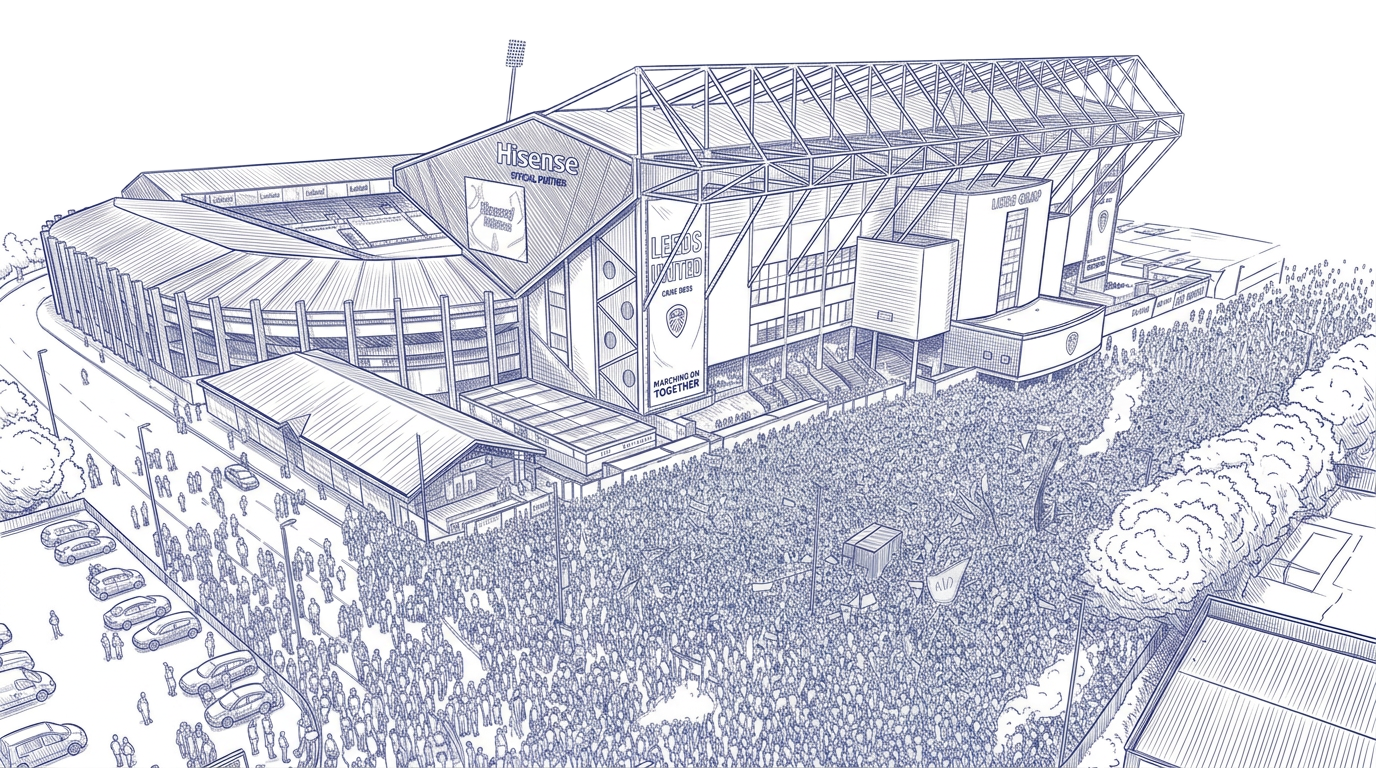
Elland Road has staged cup finals, title celebrations and European nights. It also doubled for Wembley in an Oscar-winning film, giving the stadium an unlikely brush with Hollywood.