
News
Manchester United 0–1 Leeds United, 3 January 2010: Beckford at Old Trafford: The Day Leeds Made the FA Cup Believe Again
On 3 January 2010, Jermaine Beckford scored at Old Trafford and Leeds knocked Manchester United out of the FA Cup. A famous cup upset, but also a reminder of the pride that survived Leeds’ fall into League One.

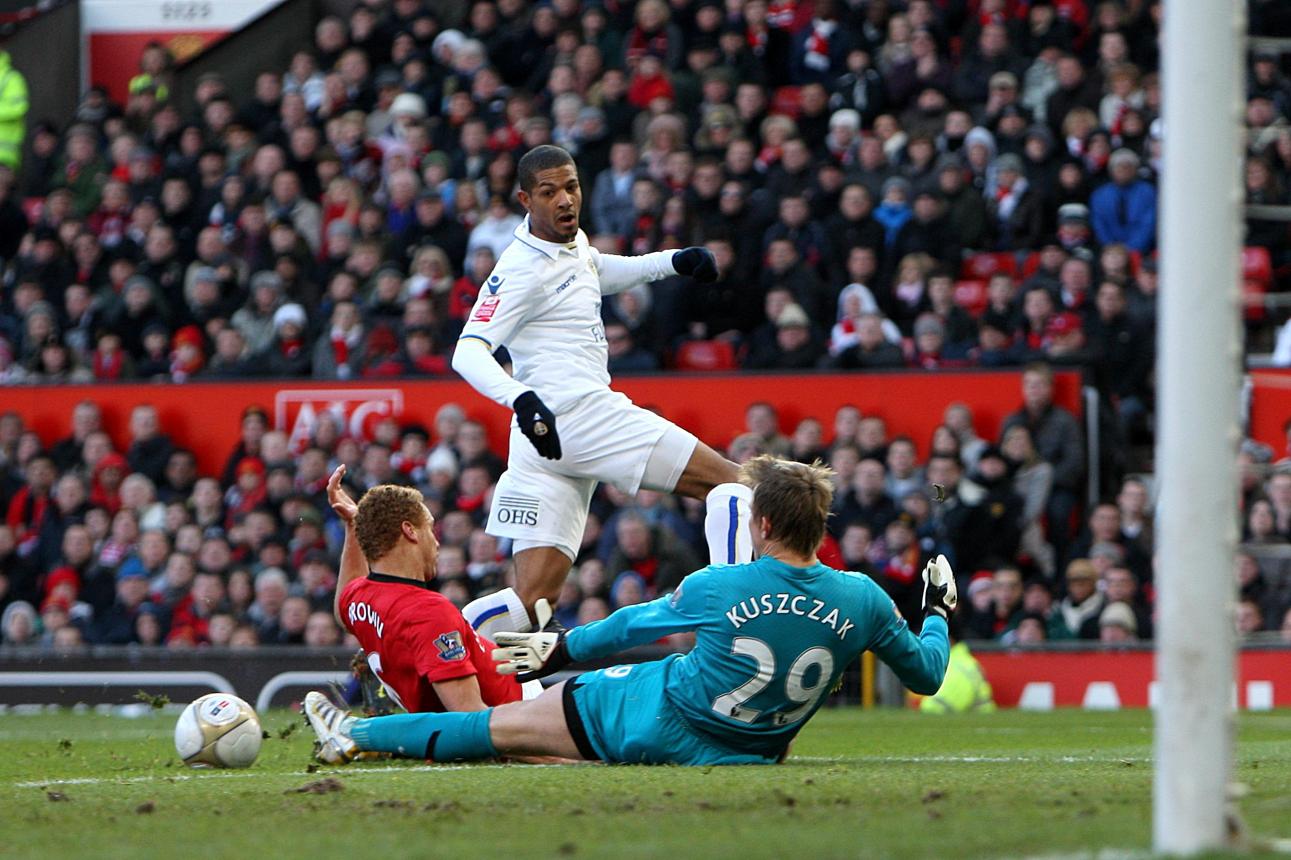
Beckford at Old Trafford: The Day Leeds Made the FA Cup Believe Again
The first thing to understand about Manchester United 0–1 Leeds United is the distance between the two clubs on that January afternoon. Manchester United were the reigning Premier League champions, one of the richest and most powerful clubs in the world, playing at Old Trafford in front of a sell-out crowd. Leeds were League One leaders, a club still carrying the bruises of relegation, financial collapse and three seasons in English football's third tier. In the league table, the gap was roughly 42 places. In the imagination of football, it was larger still.
The rivalry had not gone anywhere
The two clubs had not met in a competitive match for nearly six years. Since Leeds' relegation in 2004, the club's world had contracted dramatically. Players who had appeared in the Champions League had moved on; financial problems had become existential; administration and a points deduction had pushed Leeds deeper into difficulty. Meanwhile, Manchester United continued to collect trophies and compete at the top of the game.
The old hostility had survived the distance between the clubs. This was not a neutral cup tie between an established Premier League side and a lower-division opponent. It was Leeds against Manchester United, a rivalry rooted in history, geography and decades of resentment. For Leeds supporters, the chance to go to Old Trafford and win meant more than progressing to the fourth round. It was a rare opportunity to make the difference in status irrelevant for 90 minutes.
Nine thousand in white
Around 9,000 Leeds supporters travelled across the Pennines, part of a sell-out crowd of roughly 76,000. Simon Grayson's side had arrived in good form and top of League One. Grayson did not set them up simply to survive and hope for a replay. Leeds began with two forwards, Jermaine Beckford and Luciano Becchio, and played with enough ambition to unsettle a United defence that included established internationals and experienced senior players.
The goal
Leeds' breakthrough arrived in the 19th minute and began with Jonathan Howson spotting the run of Beckford. From deep, Howson sent an exceptional pass of around 60 yards into space behind United's centre-backs. Beckford accelerated between them, took the ball towards the left side of the six-yard area and reached it before goalkeeper Tomasz Kuszczak. Rather than smash the chance, he used a deft touch to poke the ball beyond him. It travelled agonisingly slowly towards the far post before crossing the line.
For a moment, the goal seemed to make time stop. Beckford, a striker whose journey to Leeds had included non-League football and whose pace could unsettle defenders at any level, had scored one of the most important goals in the club's modern history. Howson's vision had opened United up. Beckford's movement had made the opportunity. His composure finished it.
Not just a goal: a proper performance
The easy version of this story is that Leeds scored and then clung on. The fuller version is more impressive. Leeds pressed, competed for the ball and defended with commitment. Richard Naylor and Patrick Kisnorbo were strong at the back, while Michael Doyle and Neil Kilkenny worked hard to keep the midfield compact. Becchio gave the side a forward outlet, and Beckford's movement continued to threaten whenever Leeds could break forward.
Manchester United had chances. Wayne Rooney miscued an opportunity before Jason Crowe made a vital goal-line clearance after Rooney had got beyond the goalkeeper. Casper Ankergren made important saves, including one to deny Danny Welbeck late in the match. Michael Owen missed a good opening, and Rooney put another chance over the bar. Leeds did have moments of fortune, as any side needs when defending a lead at Old Trafford, but they were not merely spectators waiting for the clock to run down.
Ferguson's reaction afterwards was unusually blunt. He admitted that Leeds had shown the greater appetite and that United's performance had shocked him. The home side's defeat was their first FA Cup third-round exit since Bournemouth knocked them out in 1984. Leeds had earned it by playing with belief and without the reverence that can make an underdog freeze.
The final minutes
As the match moved into stoppage time, every clearance felt consequential. United pushed forward; Leeds threw bodies in the way, defended crosses and kept trying to relieve the pressure. When Chris Foy finally blew the whistle after more than five additional minutes, the Leeds players celebrated with the disbelief of a team that knew what it had done. The travelling supporters had not travelled simply to be part of the occasion. They had witnessed a genuine upset.
Why this match mattered
The result was not a promotion, a trophy or a turning point that instantly solved Leeds' problems. It did something less tangible, but still important: it gave the club an afternoon when its old stature became visible again. The same shirt that had been seen suffering through administration and League One had been carried into Old Trafford and had beaten the defending champions in a knockout match.
The result also gave Jermaine Beckford his place in Leeds folklore. His goal became one of the FA Cup's iconic modern moments. Yet it would be wrong to make this only his story. Howson supplied the pass; Ankergren, Crowe, Naylor, Kisnorbo and the rest of the side kept United out; Grayson selected a team brave enough to believe it could win. The victory belonged to the whole side, with Beckford's finish as its unforgettable centrepiece.
There was another twist in the cup run. Leeds drew 2–2 away to Tottenham Hotspur in the next round before losing the replay 3–1. The run ended, but the memory of Old Trafford remained untouched. The fourth-round exit could not undo what Leeds had achieved in Manchester.
Conclusion
For a club accustomed to being defined by the distance between its history and its present, Beckford at Old Trafford offered a rare, uncomplicated answer. On that day, Leeds were better than Manchester United. They defended with intelligence, attacked with conviction and left with a result nobody could take away from them.
There is a temptation to treat great cup upsets as nostalgia: a day when the impossible happened, filed away as an exception. For Leeds supporters, the victory meant more. It reminded them that the club had not lost its character simply because it had lost its place. The league position could say League One. The result said Leeds United. And for one glorious afternoon, that was enough.