
News
Leeds United 2–1 Bristol Rovers, 8 May 2010: The Final Day, Ten Men and Promotion: Leeds United 2–1 Bristol Rovers
Ten men, a goal down, and the play-offs threatening again. Leeds beat Bristol Rovers 2–1 on the final day of 2009–10, securing promotion to the Championship after three seasons in League One.

The Final Day, Ten Men and Promotion: Leeds United 2–1 Bristol Rovers
Promotion should not really need to be this difficult. By the final afternoon of the 2009–10 season, Leeds United had already endured two years of play-off disappointment, a points-deduction season, a Wembley defeat to Doncaster and a semi-final loss to Millwall. They had spent three seasons in League One and were desperate to leave it behind. All they had to do was beat Bristol Rovers at Elland Road and secure second place. Naturally, Leeds chose to make it as complicated as possible.
The weight of two failed attempts
The club had dropped into League One in 2007. In the first season, the 15-point deduction still shadowed every result, and the campaign ended in heartbreak at Wembley when Doncaster won the play-off final. A year later, Leeds again reached the play-offs, only to be beaten by Millwall in the semi-finals. By 2010, promotion had become more than a sporting target. It was the next step in the club's recovery and a chance to stop measuring progress by how close Leeds had come to escaping.
Simon Grayson had taken charge in December 2008 and gradually built a more resilient side. The 2009–10 season offered a strong start, then a familiar wobble, and finally a tense fight to secure automatic promotion. Leeds entered the last day knowing that a win would guarantee their place in the Championship. A draw or defeat would leave them vulnerable to Millwall, who were playing Swindon Town. Leeds had their fate in their own hands, a phrase that always sounds reassuring until a match begins to go wrong.
A red card and a bad start
The afternoon began in front of 38,234 supporters at Elland Road. Leeds were full of expectation, but Max Gradel's dismissal in the 34th minute transformed the match. Gradel had been involved in an off-the-ball confrontation with Bristol Rovers defender Daniel Jones after a sequence of disputed contact and stoppages. His reaction was judged violent conduct. He initially resisted leaving the pitch, the incident escalated, and teammates had to intervene. It was a chaotic, self-inflicted blow in the match Leeds could least afford to complicate.
The first half ended without a goal, but shortly after the break, the mood changed from tension to alarm. Jones crossed from the left, Jo Kuffour turned the ball back across goal and Darryl Duffy finished from close range. Bristol Rovers led 1–0 in the 48th minute. Leeds were a man down, behind on the scoreboard and facing the prospect of another season in League One. The noise that had filled Elland Road drained away into an anxious hush.
Howson changes the mood
Grayson responded by bringing Jonny Howson off the bench. The substitution proved decisive almost immediately. Five minutes after coming on, Howson collected the ball outside the area and struck a superb equaliser in the 59th minute. It was a goal of technique and nerve, hit cleanly from the edge of the box and delivered at the moment Leeds most desperately needed someone to take responsibility.
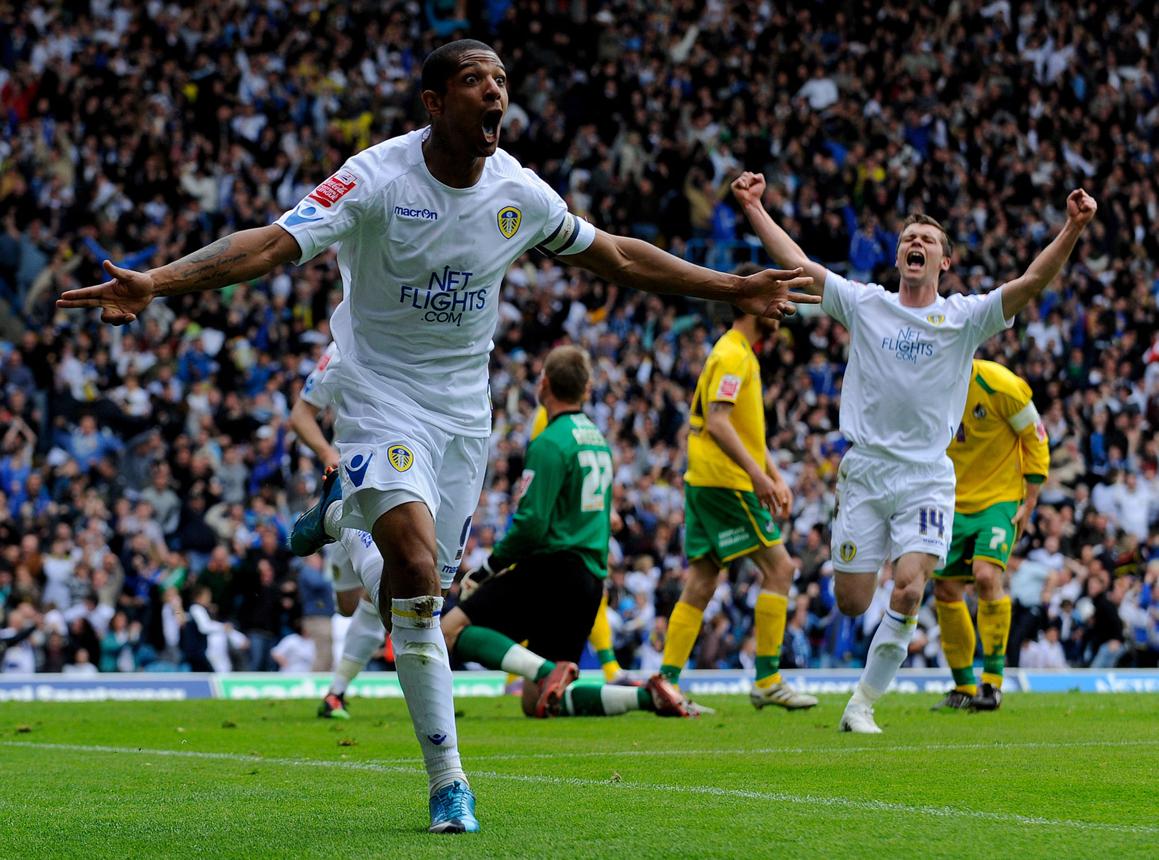
For a few seconds, the match was level and the promotion race remained unresolved. Then Leeds attacked again. Bradley Johnson's effort was stopped on the line amid the scramble, but the ball fell kindly for Jermaine Beckford, who finished to make it 2–1 in the 63rd minute. Four minutes had passed between the equaliser and the winner. In a match that had looked like a slow-motion disaster, Leeds had turned the whole afternoon around.
The pressure of the final half-hour
There was still time for the game to become uncomfortable again. Leeds were playing with ten men, Bristol Rovers were willing to counter, and every clearance felt like it might be the one that sent the promotion dream back into the play-offs. Neill Collins struck the post with a header, and Leeds had opportunities to settle the game, but no one at Elland Road was in a mood to demand elegance. They needed the clock to move and the score to stay where it was.
Elsewhere, Millwall did win their match against Swindon. That made Leeds' victory all the more important: a draw would not have been enough to preserve second place. When the final whistle came, Leeds had finished on 86 points, one ahead of Millwall on 85. Norwich won the division, but Leeds had secured the other automatic promotion place.
The pitch invasion
The final whistle produced scenes of release as thousands of supporters poured onto the pitch. It was not a carefully choreographed celebration. There had been frustration, anger, fear, a red card, a goal conceded and a four-minute turnaround. Three years of life in the third tier, two failed attempts to get out and a whole season's anxiety seemed to arrive at once. Players struggled to reach the tunnel through the crowds; the stadium announcement warned supporters to leave the pitch, with very little chance that anyone was listening.
The celebrations were messy, emotional and entirely understandable. Leeds had won promotion through the automatic route, not through another play-off coin toss. For supporters who had travelled to Wembley in 2008 and watched the Millwall tie in 2009, the difference was immense. There would be no more waiting for another match, no second leg, no neutral stadium, no hope pinned on another 90 minutes. The job was done.
Beckford's farewell and what came next
The afternoon also proved to be Jermaine Beckford's final appearance for Leeds. His goal secured promotion, but his contract was nearing its end and he would leave to join Everton in the summer. That gave the moment a bittersweet edge: one of the club's most important forwards of the League One years had scored the goal that carried Leeds out of the division, then departed for the Premier League.
Beckford's story was a fitting one for the era. He had arrived at Leeds after a career that included non-League football and became a prolific scorer. He was capable of spectacular moments, and few of them were more consequential than the goal against Bristol Rovers. His departure did not diminish what he had done. If anything, it sharpened the memory: a Leeds striker delivering one last decisive moment before moving on.
Why this match mattered
This was the most Leeds-like route imaginable to a successful outcome: first a needless crisis, then a setback, then a response delivered in a burst of quality and sheer refusal to give in. But beneath the drama, the match mattered for a practical reason. It took Leeds back into the Championship after three seasons away and ended the club's immediate dependence on the play-offs.
The victory also gave Grayson an important achievement in the early stages of his Leeds career. His side had been forced to absorb previous disappointments without letting them become the explanation for every new setback. On the final day, they did not panic after Gradel's dismissal or collapse when Duffy scored. Howson and Beckford converted a desperate situation into an automatic promotion finish. It was a result, not a consolation prize.
Conclusion
There are title wins that are remembered for their football and promotion days that are remembered for their relief. Leeds' 2–1 win over Bristol Rovers belonged in the second category, although Howson's finish and Beckford's quickfire winner deserve to be remembered on their own merits. It was a match full of incident because the stakes were real, and because everyone inside Elland Road understood what another failure would mean.
When the pitch filled and the players disappeared towards the tunnel, the supporters were not celebrating a return to the pinnacle of English football. They were celebrating a return to the second tier, the next step rather than the destination. After three seasons of setbacks, that was enough. The road ahead was still long, but Leeds had finally left League One behind. For that day, at least, it was possible to breathe again.