
News
Doncaster Rovers 1–0 Leeds United, 25 May 2008: Wembley, the Points Deduction and Another Year in League One
A 15-point penalty, a dramatic play-off comeback against Carlisle and 36,000 Leeds fans at Wembley. The 2008 final came down to one header, one save too late and another year of waiting.

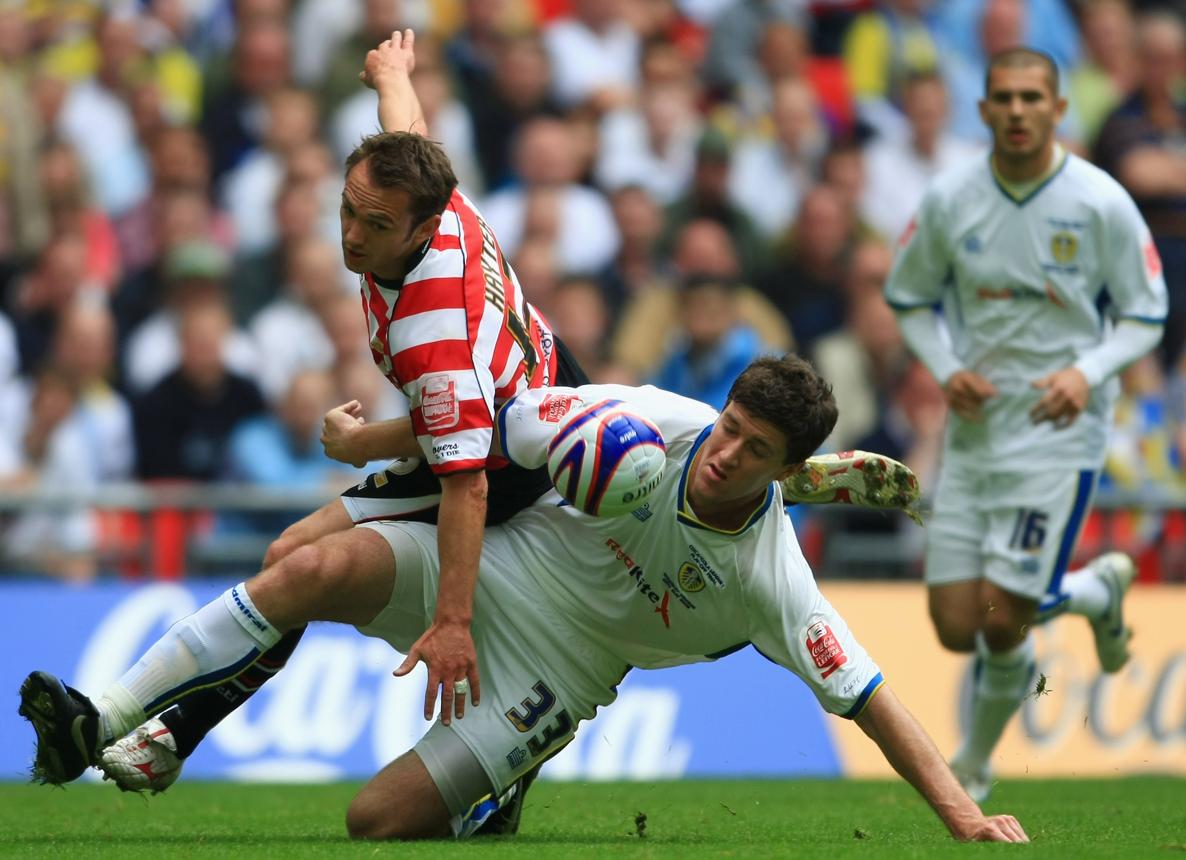
Wembley, the Points Deduction and Another Year in League One
There are defeats that hurt because a trophy slips away, and defeats that hurt because you can see exactly how much work has been spent getting to the point where it could slip away. Doncaster Rovers 1–0 Leeds United, at Wembley on 25 May 2008, was the second kind. Leeds had spent the season trying to climb out of a hole that was not entirely of their own making, had dragged themselves through a play-off semi-final that threatened to finish them, and had taken tens of thousands of supporters to Wembley believing that one final afternoon could put the club back on the road to recovery. Instead, James Hayter's header meant another year in League One.
A season that started fifteen points behind
Leeds began the 2007–08 season under a 15-point deduction imposed after the club entered administration and was found not to have complied with the Football League's insolvency rules. The club's financial crisis had already damaged its standing and shaken supporters' faith in those running it. The points penalty then made the challenge on the pitch brutally clear: Leeds had to perform well simply to get back to a position where promotion was possible.
The season was a test of stamina as much as quality. Dennis Wise left in January and former Leeds midfielder Gary McAllister took charge, inheriting a side expected to recover from the points deficit and deliver promotion. Leeds finished the regular campaign in the play-off places. That was an achievement in the circumstances, but the punishment did not disappear from the story. The penalty narrowed Leeds’ options and made the play-offs their route back to the Championship, with no room for another mistake.
Carlisle and the first fight back
The semi-final against Carlisle United was a small version of the season itself. Leeds lost the first leg at Elland Road 2–1 and looked in danger of letting their chance go. They travelled north for the second leg needing a response, and got it: a 2–0 victory secured a 3–2 aggregate win and booked a place at Wembley. After the strain of the deduction, the changes in management and the fear of another season in the third tier, the turnaround felt like a release. Leeds had survived long enough to give themselves one more match.
Wembley, and the scale of expectation
The final drew 75,132 people to Wembley, including a vast Leeds following. Leeds had sold their full allocation of around 36,000 tickets, and the sense of occasion was immense. Doncaster had finished above Leeds in the league and came into the final with a strong case of their own. Under Sean O'Driscoll they were a well-organised, progressive side, with movement and pace in attack. Their rise through the divisions had been remarkable: only five years earlier, they had been playing non-league football.
The match turns on one moment
Leeds had chances to make an early statement. Bradley Johnson shot over in the opening minute, and Jermaine Beckford tested veteran Doncaster goalkeeper Neil Sullivan. But Doncaster were dangerous from the beginning, and Leeds goalkeeper Casper Ankergren kept his side in the contest with important interventions against James Coppinger and Hayter. Doncaster looked more threatening in the first half; Leeds grew into the game and began to find spaces through Jonathan Howson and David Prutton, but never entirely took control.
The decisive goal came just after half-time. Brian Stock delivered a corner, Hayter found himself unmarked and launched into a diving header from close range. The ball hit the net, Wembley changed colour and sound, and Leeds were suddenly chasing the match rather than shaping it. The goal is often recorded as the 48th minute, though some accounts describe it as arriving in the 47th. It was the same painful truth either way: one defensive lapse in a game that had taken a season to reach.
Leeds tried to force the equaliser. Beckford and Howson found openings, but Sullivan dealt with the pressure and the balls Leeds put into the area. In the closing stages, Jonathan Douglas struck a half-volley narrowly wide from around 20 yards. It was a genuine chance, and for a moment it seemed possible that the goal might still come. It did not. Doncaster held on, and the final whistle began two very different celebrations.
Two clubs, two emotional endings
For Doncaster, promotion was the culmination of a spectacular rise and a return to the second tier for the first time since 1957. Their victory was not an accident or an act of charity from the football gods. They defended well, threatened Leeds repeatedly and took the chance that mattered. O'Driscoll's team earned its place in the Championship.
For Leeds, the loss meant a second consecutive season in the third tier. Wembley had offered the possibility that the punishment and damage of the previous years could begin to fade. Instead, those problems would follow the club into another League One campaign. The team had shown resilience, but resilience was becoming an exhausting requirement. Leeds supporters were being asked to treat survival of each crisis as progress, when what they wanted was a route back to where they believed the club belonged.
Why this match mattered
This was not simply another lost play-off final. It was a dividing line between what Leeds hoped their first League One season would achieve and what it actually delivered. The 15-point penalty was part of the context, but Doncaster's victory also forced Leeds to confront a sporting reality: history, crowd size and reputation do not score goals at Wembley. The club had to turn its resources and identity into a team capable of winning the next decisive match.
In the weeks and months that followed, McAllister's side struggled to sustain the momentum. He left in December 2008, and Simon Grayson was appointed to bring a fresh direction. The Wembley defeat did not define everything that came next, but it formed part of the chain of disappointment that made the eventual 2010 promotion feel so cathartic.
Conclusion
Ask Leeds fans about 2008 and Wembley will come back quickly: the size of the following, the chance of escape, the hope that a club battered by administration and points deductions could finally begin to look forwards. Then the memory turns to Hayter's header. Football is unkind in this way. It can ask supporters to carry months of hope into one afternoon, then condense the whole season into one mark in a goals column.
Doncaster went up. Leeds stayed down. The story was painful, but it was also part of the long route towards recovery. It mattered because the setback had consequences, because the supporters deserved an explanation of how close they had come, and because the pain of 2008 would make the release of 2010 mean more. Marching On Together does not claim that the road is fair. It says that the road is shared.