
News
Leeds United 4–3 Liverpool, 2000: Viduka’s four-goal masterclass
Liverpool led 2–0 and then 3–2, but Mark Viduka scored four times to give Leeds a memorable 4–3 victory and one of the great individual performances of the O’Leary era.

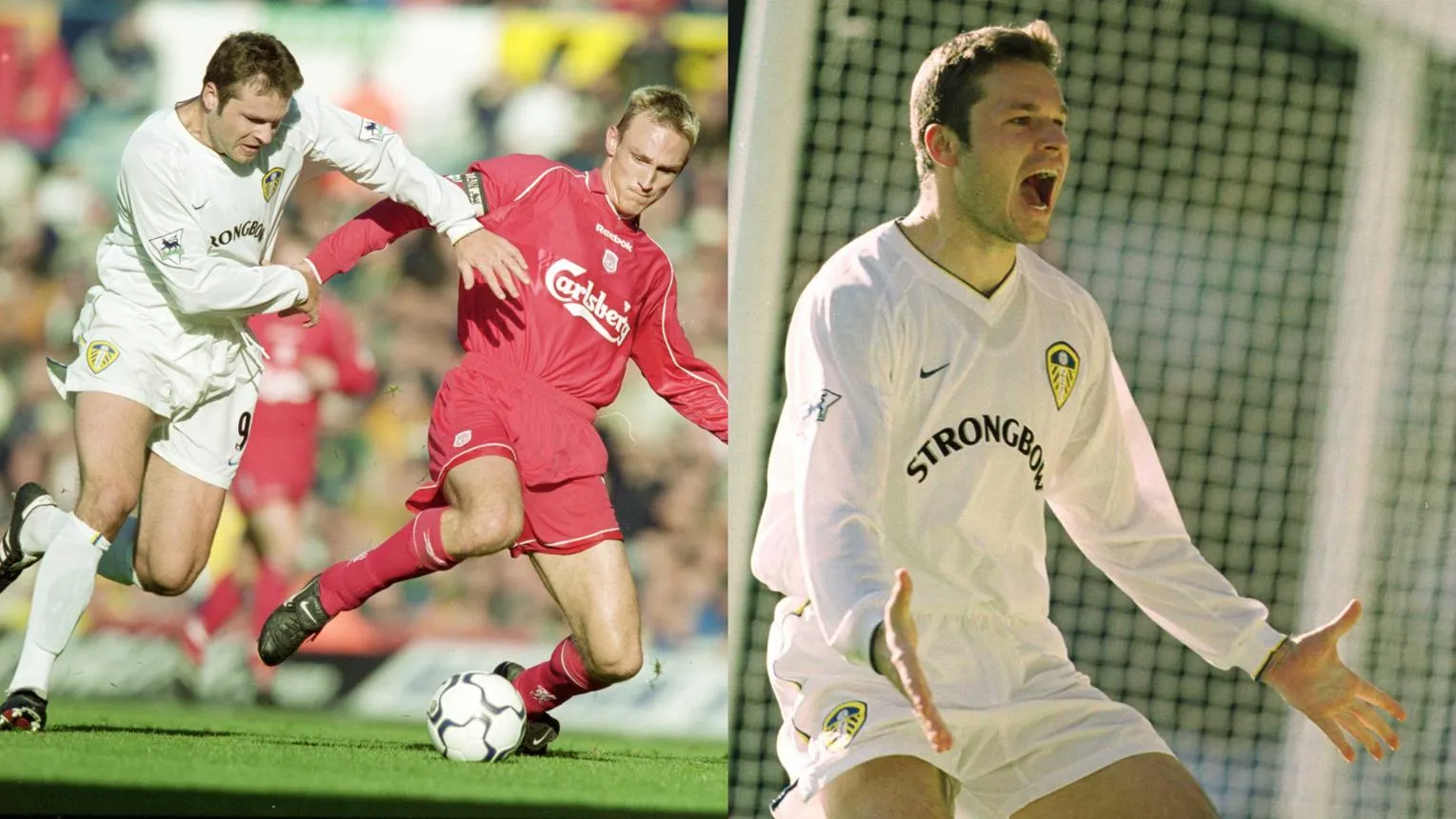
Viduka’s four-goal masterclass
Liverpool led twice and appeared to have the match under control. Mark Viduka then produced four finishes of such calm quality that one of the most memorable games of the O’Leary era became, quite simply, his afternoon.
Some football matches become classics because they are close. Others because they contain a twist that nobody could have predicted. Leeds United’s 4–3 victory over Liverpool on 4 November 2000 had both, but its lasting place in the club’s memory rests on one extraordinary fact: Mark Viduka scored all four Leeds goals.
Liverpool were a formidable opponent, fresh from a run of wins and with a squad built around experience and strength. Leeds, by contrast, were enduring a difficult spell. Injuries had disrupted David O’Leary’s side, results had become inconsistent and the team was trying to balance Premier League ambitions with the demands of Champions League football. Few could have predicted that the morning at Elland Road would produce a match remembered decades later for one striker’s effortless-looking destruction.
A nightmare start
Liverpool struck early. Sami Hyypiä headed them in front after two minutes, and Christian Ziege doubled the advantage before the opening twenty minutes were complete. Leeds were two goals down before the match had properly found its rhythm. With Liverpool defending well and Leeds already dealing with a long injury list, the afternoon threatened to become another frustrating entry in a season that had not yet settled.
Viduka pulled one back in the 24th minute, giving Leeds a route into the game. His finish was the first sign that Liverpool’s defence could be made uncomfortable by the Australian’s combination of strength, touch and deceptive composure. Yet the match remained fragile, and Leeds went into half-time needing more than a reminder that the contest was still alive.
Four goals, four different answers
Viduka levelled shortly after the restart, rising to meet a cross and finishing with the authority of a centre-forward who knew exactly where the ball would arrive. At 2–2, Leeds had rescued themselves from the disastrous beginning. Liverpool were not finished, however. Vladimir Šmicer restored their lead in the 61st minute, leaving Leeds trailing 3–2 and facing another test of nerve.
Then came the extraordinary final quarter of the match. Viduka scored in the 73rd minute to bring Leeds level again. Two minutes later, he completed his fourth goal and put Leeds ahead. The turnaround was so rapid that Liverpool scarcely had time to adjust before the match had been transformed. The Australian had found a different way to hurt them each time, mixing movement, clean striking and awareness with the coolness of a player who did not appear to feel the pressure the rest of the stadium could sense.
There has been debate over the offside position around the winning goal, and no retrospective account needs to pretend that the match was free of controversy. But the larger point survives every replay. Viduka had delivered four goals against one of the Premier League’s strongest teams, and Leeds had turned a two-goal deficit into a victory in the space of a half.
The value of a great afternoon
Viduka’s performance was not simply about quantity. His goals showed why he was such a difficult striker to defend against. He could occupy centre-backs with his physical presence, link the play with intelligent touches and finish chances with a precision that sat at odds with the common caricature of a big target man. The match recalled an older Leeds tradition of powerful centre-forwards who could combine craft with force.
The victory also arrived at an important point in the season. Four days later, Leeds travelled to the San Siro and drew 1–1 with AC Milan, a result that carried them into the second group stage of the Champions League. The Liverpool game gave the team belief at a time when injuries and a difficult run of form could easily have diminished it. It was not the start of uninterrupted success, but it was a reminder of the heights available to this group.
O’Leary’s Leeds are often remembered through their European run, the academy players who emerged and the high-energy football that carried them into the Champions League semi-final the following spring. The Liverpool match belongs beside those memories because it showed the team’s attacking ceiling in its purest form. When Leeds played with confidence and precision, they could dismantle anyone.
The final score was 4–3. The defining statistic was four goals by one man. The lasting memory is Viduka, seemingly unhurried amid the chaos, repeatedly finding a way past Liverpool until a match that had looked lost became one of Elland Road’s great afternoons.