
News
AC Milan 1–1 Leeds United, 2000: Dom Matteo and the night Leeds stood up to Europe
On a rain-soaked night at the San Siro, Dominic Matteo headed Leeds in front against AC Milan. The 1–1 draw was enough to take David O’Leary’s side through to the next group stage.

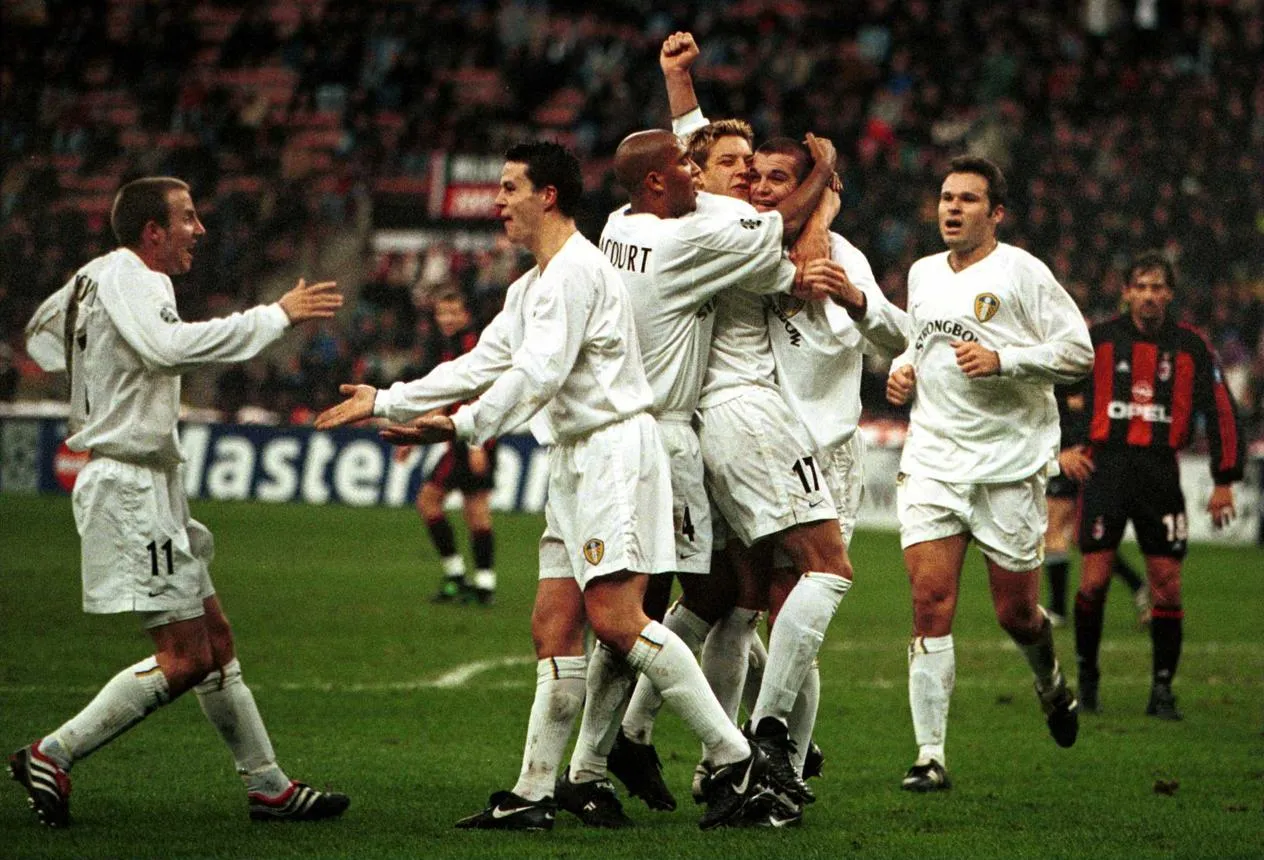
Dom Matteo and the night Leeds stood up to Europe
Dominic Matteo’s header at the San Siro did not win the match, but it helped Leeds win something more important: a place in the next phase of the Champions League. On a rain-soaked night in Milan, a young English side held its nerve against one of the most decorated clubs in Europe.
There are matches that turn a player into folklore in a single moment. Dominic Matteo had already become an important member of David O’Leary’s Leeds side, but his header at the San Siro on 8 November 2000 gave him a place in the club’s European memory that no ordinary defensive performance could have secured.
The result was 1–1, not a Leeds victory. The distinction matters because the story is sometimes tangled with another Milan match: Leeds had beaten AC Milan 1–0 at Elland Road in September, with Lee Bowyer scoring. Matteo’s famous header came in the return fixture in Italy, where the draw was enough to send Leeds through to the second group stage. One match announced Leeds’ ability to beat Milan; the other showed their capacity to survive Milan’s challenge on its own ground.
An intimidating group and a difficult route through
Leeds had qualified for the Champions League by finishing third in the previous Premier League season. Their first group placed them alongside Barcelona, AC Milan and Beşiktaş. The draw was unforgiving, even for a club that had just finished among England’s leading sides. Barcelona had humbled Leeds in the opening away fixture, and the campaign was shaped by the need to respond rather than retreat.
A 1–0 home win against Milan, secured by Bowyer, proved that Leeds could compete with the Italian giants. A 6–0 demolition of Beşiktaş at Elland Road added confidence. Yet the group remained finely balanced. A draw at Beşiktaş and a home draw against Barcelona meant Leeds travelled to Milan needing a result to guarantee their progress.
A header that changed the evening
The San Siro was a forbidding place to visit, and Milan had the players and history to make the occasion feel weighted against the visitors. Leeds were not simply trying to collect a respectable result. They were trying to protect a place in a competition that had quickly become central to the club’s ambitions.
Matteo rose to meet a Lee Bowyer corner just before half-time and headed Leeds in front. It was a goal born of timing and determination, a defender attacking the ball with conviction in a moment when the season’s direction was at stake. For a club whose supporters had waited years to return to the top level of European competition, the sight of a Leeds player scoring at the San Siro had an almost unreal quality.
AC Milan responded after the break through Serginho, and the match ended 1–1. The point was hard-earned. Leeds had to deal with pressure, an intimidating atmosphere and the demand to maintain their shape after the lead was lost. The result was enough: Leeds advanced to the second group stage, becoming one of the English sides to reach the last sixteen.
More than a goal
Matteo’s strike became a song, a memory and an emblem of the O’Leary generation’s European adventure. It offered a rare blend of individual significance and collective consequence. This was not a consolation goal in a defeat or a spectacular moment in a dead rubber. It was the goal that put Leeds on the threshold of the next stage.
The team around Matteo matters to the story. Nigel Martyn’s presence in goal, the defensive work of Lucas Radebe and Gary Kelly, and the energy of Bowyer and Olivier Dacourt all helped Leeds withstand Milan’s response. The young attackers gave the side a threat, but the campaign also needed resilience, concentration and moments of bravery from players who were not usually the headline-makers.
The Champions League run would continue through the winter and into spring. Leeds would negotiate another group stage, reach the quarter-finals and come within two matches of the final before Valencia ended the dream. The path to those nights was not built only on the glamour of attacking football. It was built on points like this one, won when the margin for error had nearly disappeared.
For supporters, Matteo’s header represents the moment Leeds stopped looking like visitors to the elite and started behaving like a team that belonged there. It was a draw that felt like a victory, not because the scoreline should be rewritten, but because the consequence was so large.