
News
Leeds United 3–0 Deportivo La Coruña, 2001: Elland Road’s Champions League statement
After Deportivo called Leeds the weakest side left in the Champions League, Elland Road responded with a breathtaking 3–0 victory that put Leeds within reach of the semi-finals.

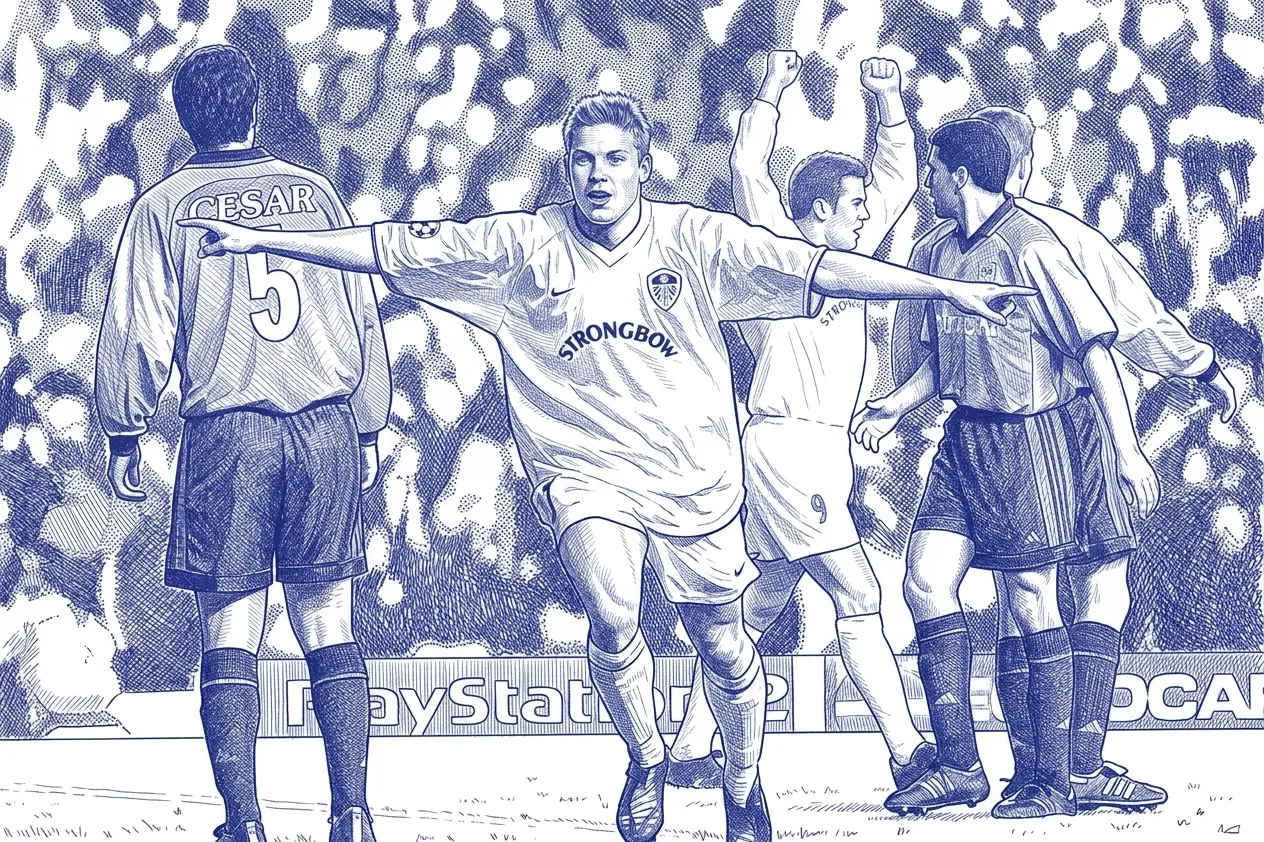
Elland Road’s Champions League statement
Deportivo arrived as Spanish champions and were sufficiently confident to describe Leeds as the weakest team left in the competition. Leeds answered with one of the great European performances at Elland Road, winning 3–0 through goals from Ian Harte, Alan Smith and Rio Ferdinand.
The Champions League has a way of exposing the difference between a good domestic team and one that truly belongs among Europe’s strongest. In April 2001, Leeds United had reached the quarter-finals and were faced with Deportivo La Coruña, the reigning champions of Spain. It was an intimidating draw, but the visitors arrived with a confidence that bordered on condescension.
Deportivo midfielder Víctor had publicly suggested that Leeds were the weakest team remaining in the competition and the easiest draw available. The comment was reported across the build-up and quickly became part of the atmosphere around the tie. Leeds did not need a slogan to respond. They needed a performance, and on 4 April they produced one of the most complete European nights in the club’s history.
Leeds against Spain’s champions
David O’Leary’s team had already survived a demanding campaign. They had negotiated a difficult opening group containing Barcelona, Milan and Beşiktaş, then progressed through a second stage with Real Madrid, Lazio and Anderlecht. The quarter-final was the next step in a run that had taken Leeds from hopeful newcomers to legitimate contenders for a place in the last four.
They were not without problems. Captain Lucas Radebe was unavailable after picking up a knee injury. Alan Smith, Dominic Matteo and Olivier Dacourt also carried concerns into the match. Leeds nevertheless fielded a team rich in character and quality, with Nigel Martyn in goal, Rio Ferdinand marshalling the defence, David Batty and Dacourt competing in midfield, and Mark Viduka and Smith leading the attack.
Harte’s left foot opens the door
Leeds started brightly, creating openings through the movement of Harry Kewell and the intelligence of the midfield. Deportivo had threats of their own, but their confidence was tested when Alan Smith was fouled just outside the area. Ian Harte stepped up and struck a free-kick of exceptional quality, sending the ball beyond Francisco Molina and giving Leeds the lead in the 27th minute.
The goal changed the atmosphere. Leeds were no longer trying to prove that they belonged in the tie; they were making Deportivo deal with the pace, physicality and technical ability of a team playing in front of a roaring Elland Road. The home side continued to attack, and the visitors could not settle into the controlled rhythm they would have wanted.
Six minutes into the second half, Smith doubled the lead. His goal gave the game a new shape: Deportivo now needed to score away from home, while Leeds could defend with greater confidence and attack the spaces that opened. When Ferdinand added a third in the 66th minute, the stadium erupted. A central defender had joined the attack and finished the evening’s work, and Leeds had a three-goal advantage against one of Europe’s strongest sides.
A result that demanded respect
The match is rightly remembered as a statement, but it was not the end of the tie. Leeds lost the return leg 2–0 in Spain and progressed 3–2 on aggregate. That detail is important. The first-leg performance did not remove the need for discipline two weeks later; it gave Leeds the margin they needed to withstand a difficult night away from home.
That second-leg survival makes the Elland Road victory more impressive, not less. Deportivo had the quality to make the tie uncertain, and Leeds had to carry the emotional weight of a three-goal lead into a hostile stadium. Their 3–0 win in the first leg had created the opportunity. Their willingness to suffer in the second leg completed it.
The goalscorers capture the balance of the performance. Harte gave Leeds the precision of a specialist from dead-ball situations. Smith brought movement and competitive hunger to the frontline. Ferdinand, already one of the most gifted defenders in English football, supplied the final goal and reinforced the sense that this Leeds side had quality in every part of the pitch.
The quarter-final victory was also a rebuttal to the idea that Leeds were merely fortunate to have reached this stage. They had progressed through groups containing some of Europe’s established names and then overwhelmed the champions of Spain. The team had not yet finished the job, but it had answered Deportivo’s pre-match assessment in the most direct way available.
At Elland Road that night, Leeds were not the weakest side in the competition. They were the side setting the terms. The roar after Ferdinand’s goal was the sound of a club realising that the European dream was no longer a fantasy. The semi-final was next, and only two matches separated Leeds from a Champions League final.