
News
Valencia 3–0 Leeds United, 2001: The night the Champions League dream ended
A goalless first leg gave Leeds hope, but Valencia scored three times at the Mestalla to end O’Leary’s side’s extraordinary run to the 2001 Champions League semi-final.

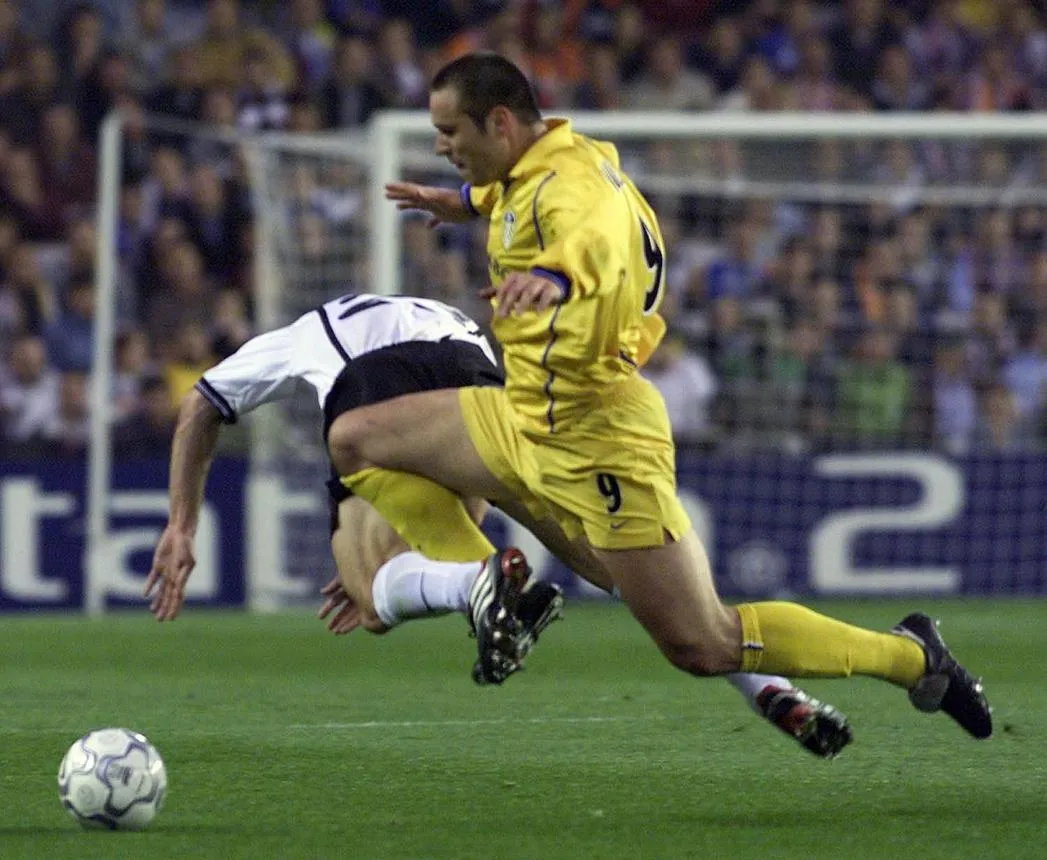
The night the Champions League dream ended
Leeds reached the semi-final with a young team that had travelled further in Europe than most people expected. After a goalless first leg at Elland Road, Valencia turned the return match into a relentless test, scoring three times and ending the dream of a first European Cup final.
The 2000–01 Champions League campaign had already given Leeds United nights their supporters would never forget. They had faced Barcelona, Milan and Beşiktaş, progressed through a second group stage featuring Real Madrid, Lazio and Anderlecht, and beaten Deportivo La Coruña in a quarter-final that remains one of Elland Road’s great European performances. By the time Leeds arrived at the Mestalla in May, they were two games from the final.
They were also a young team carrying the demands of a long season. European football had made Leeds bigger in profile and richer in experience, but it had stretched a squad that was competing on several fronts. The semi-final against Valencia would become a lesson in how fine the margins are at the top of the game, and how quickly a dream can end when an opponent has the quality to exploit every hesitation.
A goalless first leg leaves everything open
The first leg at Elland Road on 2 May ended 0–0. It was a tense match with little room for error, and neither team managed to create the decisive goal. The draw meant Leeds had kept the tie alive, but it also meant that the second leg would demand a goal away from home if they were to reach the final without a penalty shoot-out.
Valencia were no ordinary opponent. Héctor Cúper’s side had reached the Champions League final the previous season and carried the experience of having gone all the way to the biggest match in European club football. Their defence was organised, their midfield had technical quality, and their forwards were capable of turning small openings into decisive moments. Leeds had done well to hold them at Elland Road. The challenge was to repeat that control in Spain.
The game escapes Leeds
The second leg began with the intensity of a match where one goal could change everything. Valencia took the lead through Juan Sánchez in the 16th minute. Leeds now had to come out of their structure and find an equaliser, while Valencia could use their technical ability and the support of the Mestalla crowd to control the spaces.
Sánchez scored again early in the second half, and Gaizka Mendieta made it 3–0 just five minutes later. In the space of a few minutes, the tie had moved beyond Leeds’ reach. The scoreline was harsh in its finality, but Valencia had been clinical at the moments when Leeds could not afford to concede. The visitors had arrived with the possibility of reaching a first European Cup final; they left with the campaign over.
The defeat should not be reduced to the idea that Leeds were simply outclassed. The first leg had been closely contested, and the English side had earned their place in the last four through a demanding sequence of matches. What separated the teams in Valencia was the ability to take control of the decisive moments. Valencia scored when the match opened up. Leeds were unable to respond before the deficit became insurmountable.
The cost of coming so close
The disappointment was immense because the campaign had moved so far beyond expectation. Leeds had been absent from the European Cup for decades, and the Champions League was becoming a different kind of competition, with powerful clubs and enormous financial rewards. A place in the final would have represented the high point of the O’Leary generation’s sporting achievement.
The players had given supporters a new set of memories: Matteo’s goal at the San Siro, the 3–0 win over Deportivo, the late drama of the group stages and the sense that Leeds could go toe-to-toe with Europe’s established clubs. Those moments were not erased by the Valencia defeat. If anything, their brilliance explains why the ending hurt so much.
There is a particular kind of sorrow attached to losing at the semi-final stage. You have gone beyond the point where reaching the last four can be called a surprise, yet you have not reached the one match that would define the campaign in the eyes of history. The final remains visible, only just out of reach. For Leeds, the 3–0 defeat was not only a scoreline; it was a door closing on an era’s greatest opportunity.
Leeds would not return to the Champions League semi-final in the following years. Financial pressures, player departures and the gradual unravelling of the team would change the club’s trajectory. The Valencia game was not the cause of that decline, but its position in the story makes it feel like a dividing line: the last night of a European dream before the realities around the club became harder to ignore.
The final whistle at the Mestalla left Leeds with disappointment, not disgrace. They had reached the last four of Europe’s leading competition and fallen to a team with the experience and quality to punish them. The story belongs in Matches That Mattered because it captures both the height of the achievement and the cruelty of coming so close.