
News
Cardiff City 2–1 Leeds United, 2002: The FA Cup shock that exposed the cracks
Leeds arrived at Ninian Park as Premier League leaders, but Mark Viduka’s opener was cancelled out before Alan Smith’s red card and Scott Young’s late strike sealed a famous Cardiff upset.

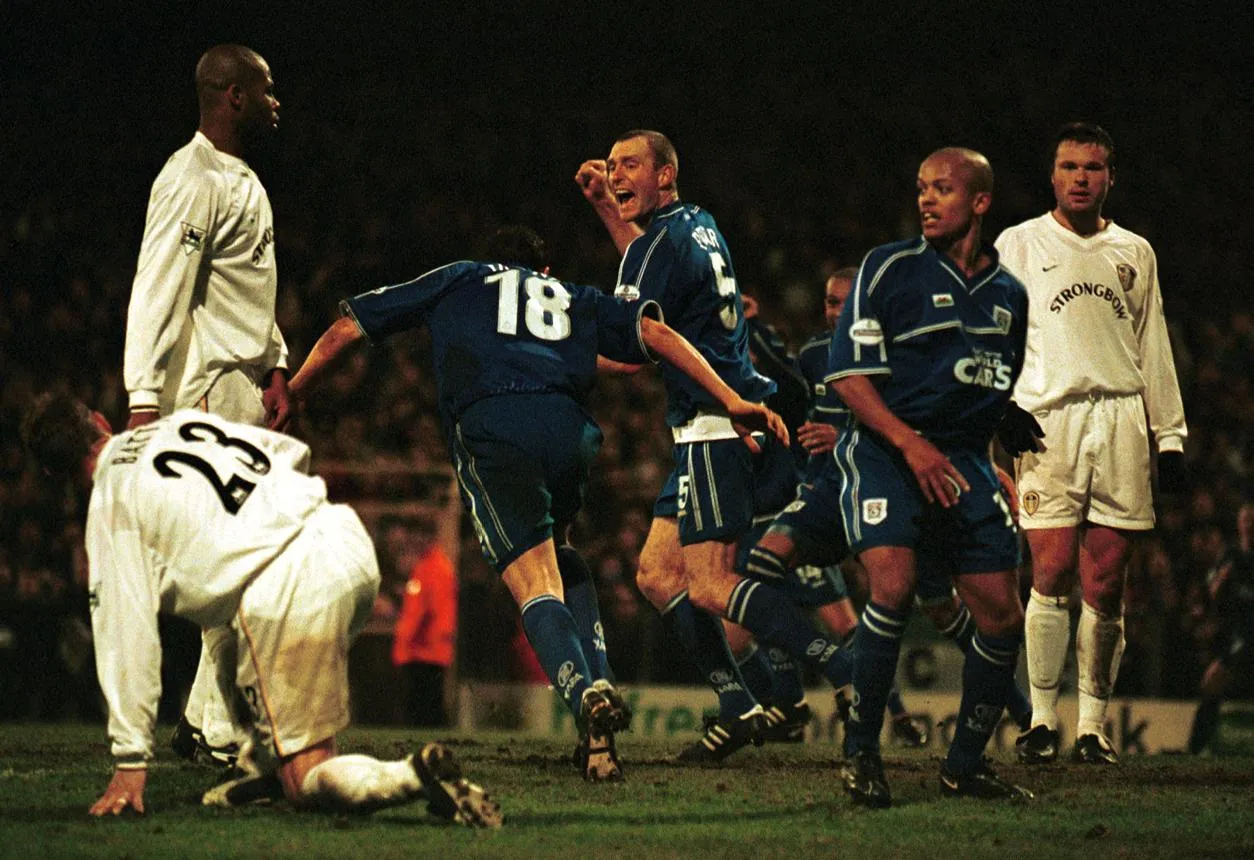
The FA Cup shock that exposed the cracks
Leeds travelled to Ninian Park as Premier League leaders and Champions League semi-finalists from the previous season. Cardiff were in the second tier. Mark Viduka scored first, Alan Smith was sent off before half-time, and Scott Young’s late winner delivered a famous cup upset.
On 6 January 2002, Leeds United arrived at Ninian Park with the status of a club moving among football’s elite. They had reached the Champions League semi-final the previous season, possessed internationals across the pitch and were sitting at the top of the Premier League when the FA Cup third round arrived. Cardiff City, by contrast, were in the Second Division, the third tier of English football at the time.
The gap between the clubs was not just a division. It was a gap in resources, reputation and recent experience. Leeds had Rio Ferdinand, Jonathan Woodgate, David Batty, Lee Bowyer, Mark Viduka and Robbie Fowler. Cardiff had a raucous home crowd and the belief that a cup tie could temporarily flatten the hierarchy. By the final whistle, the Welsh side had produced one of the defining giant-killings of the modern FA Cup.
A Leeds start, then a change of direction
Leeds began as the more polished side and took the lead after twelve minutes. Gary Kelly played Viduka through, and the Australian finished powerfully past Neil Alexander. It was the sort of goal that suggested the afternoon might follow the expected script: Leeds would impose their quality, Cardiff would chase the game, and the Premier League side would move safely into the next round.
Cardiff refused to let the script stand. Graham Kavanagh equalised with a superb free-kick, curling the ball around the wall and past Nigel Martyn. The home support grew louder and the tie became an event in its own right. Cardiff were no longer simply trying to keep the score respectable. They had seen a route into the game and began to believe the upset was possible.
The most consequential moment came just before half-time. Alan Smith was sent off after an altercation with Andy Legg. Smith’s dismissal changed Leeds’ problem from a cup tie to a survival exercise. They had to manage the remainder of the match with ten men, while Cardiff had an extra player and a crowd increasingly convinced that the favourites were vulnerable.
Scott Young and the late winner
Leeds defended with determination after the break. Viduka came close to restoring the lead, but Scott Young made a crucial intervention to deny him. Cardiff kept applying pressure, forcing corners and asking questions of a Leeds defence that was tiring under the numerical disadvantage.
With around four minutes remaining, the decisive moment arrived. Kavanagh delivered another dangerous corner. Leo Fortune-West’s header was blocked, the ball dropped into the crowded area, and Young threw himself at it to volley the loose ball into the net. Ninian Park erupted. The defender’s finish completed the turnaround and sent Cardiff into the fourth round, while the Premier League leaders were heading out.
The end of the match brought further disorder, with a pitch invasion and confrontations between sections of the crowd. It became a story about more than the scoreline, and the aftermath included disciplinary consequences for Cardiff. But the image that endured for many neutrals was the underdog’s celebration after a win few had expected.
A warning beneath the upset
For Leeds, the defeat was humiliating, but it did not immediately mean the season had collapsed. They finished fifth in the Premier League and qualified for Europe. The squad remained talented, and the club were still trying to balance a major European campaign with domestic competition. It is important not to treat one cup defeat as a magical explanation for the financial and sporting problems that followed.
Yet the result does belong in the wider story of the O’Leary years. Leeds had built a team capable of challenging Manchester United and playing in Champions League semi-finals, but pressure was mounting on and off the pitch. The club’s expensive ambitions had created expectations that were difficult to sustain, and a season that began with Leeds leading the Premier League would later become another reminder of how quickly circumstances can shift.
Cardiff, meanwhile, demonstrated one of the FA Cup’s oldest truths: reputations do not score goals, and a single sending-off can change the balance of a match. They had been 53 league places below Leeds, yet they matched the visitors in the moments that mattered and finished with the winning goal.
The story is not that Leeds had forgotten how to play football. It is that even a side filled with international quality could be pulled into a contest where discipline, atmosphere and small decisions mattered more than reputation. Cardiff took their chance. Leeds left Ninian Park with a defeat that would live much longer than the third-round tie itself.