
News
Leeds United 4–0 Norwich City, 16 May 2024: The Night Leeds Reached Wembley Again
A goalless first leg left Leeds with everything to do at Elland Road. Four goals, three before half-time, delivered a commanding win over Norwich and sent Daniel Farke’s team to Wembley, where promotion would be decided in one last match.

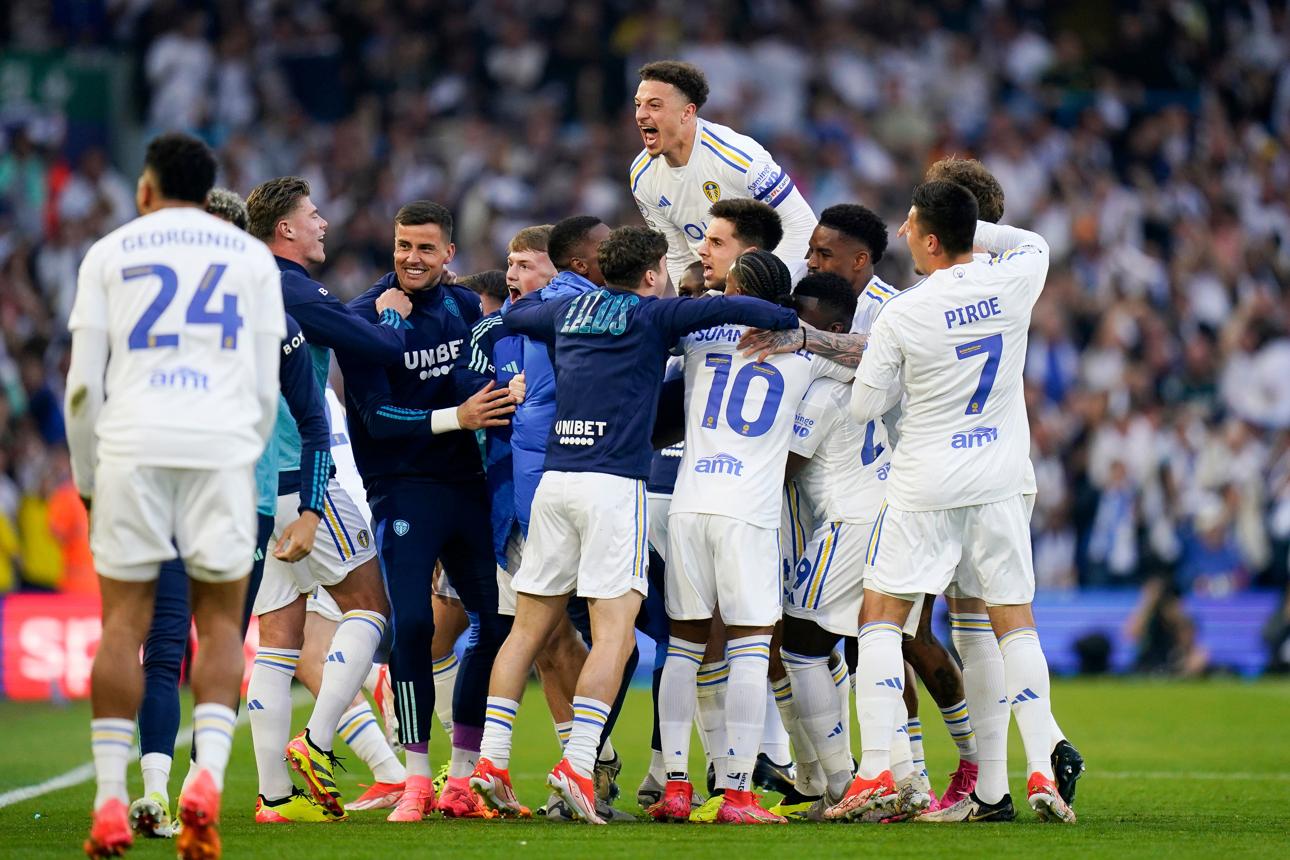
The Night Leeds Reached Wembley Again
One more game, or another season of waiting
On 16 May 2024, Leeds United knew that the next 90 minutes would determine whether their season continued towards Wembley or ended in the familiar disappointment of the play-offs. They had spent much of the Championship campaign among the automatic-promotion contenders, but a run of late-season setbacks had left them third. Ipswich and Leicester had taken the two places that guaranteed promotion; Leeds would have to do it the hard way.
Their semi-final first leg at Carrow Road had ended 0–0. Norwich had defended well, Leeds had not found a goal, and the tie remained poised. The absence of an away goal did not carry the same meaning it once had in European two-legged contests, but the practical problem was unchanged: one mistake could undo a season, while one good spell could turn the tie decisively.
Elland Road arrived ready to carry the side. More than 36,000 supporters filled the stadium, and the atmosphere had the sense of a club asking its team to take control of a moment it had earned but not been given. This was also Daniel Farke’s old club. He had led Norwich to promotion twice, and now he stood in the opposite dugout trying to take Leeds back to the Premier League.
Gruev takes the tie by surprise
The opening goal arrived after only seven minutes, and it was a clever one. Leeds won a free-kick, and Ilia Gruev took it quickly, catching Norwich goalkeeper Angus Gunn before the defensive shape was ready. His first goal for Leeds gave the home side the breakthrough they needed and changed the emotional temperature of the night.
It was not just the quality of the finish; it was the alertness. Play-off matches can become consumed by anxiety, each side more concerned with what might go wrong than with what is possible. Gruev acted before the moment could be weighed down by nerves. Leeds were ahead, Norwich were behind in the tie, and the crowd had a goal around which to gather its belief.
The first half becomes a statement
Joel Piroe doubled the lead in the 20th minute, heading home after Willy Gnonto’s delivery from the right. The goal moved Leeds into a commanding aggregate position, but the team did not retreat into protection mode. It continued to press Norwich and look for a third, knowing that a one-goal lead is never completely secure in a play-off tie.
That third goal came just before half-time. Georginio Rutter finished after Leeds worked the ball into dangerous areas and made Norwich defend facing their own goal. By the interval, Leeds were three goals up on the night and three ahead on aggregate. They had turned a contest that began with tension into a display of authority.
There was a satisfying variety to the goals. Gruev’s quick thinking was followed by Piroe’s presence in the area and Rutter’s contribution to a move built on movement and connection. Leeds had been a team of attacking fluency for much of the campaign; this was the sort of first half that reminded everyone why they had accumulated 90 points in the league.
Summerville adds the finish
Norwich needed a goal immediately after the break to have any prospect of changing the tie. Leeds had to avoid the one danger that often follows a dominant first half: giving an opponent an early foothold and allowing doubt to seep into the stadium. Instead, Leeds stayed in control, limiting Norwich’s opportunities and continuing to threaten on the transition.
Crysencio Summerville made it 4–0 in the 68th minute, cutting the tie beyond doubt. The goal was a fitting contribution from a player whose attacking output had helped define the season. The regular league campaign had made him one of the Championship’s most influential forwards, and this was the kind of high-pressure moment in which a leading player needed to deliver.
Norwich’s task was now impossible. The final half-hour became an exercise in seeing the game out and allowing Elland Road to enjoy the result. Leeds made substitutions, the noise rose, and the team moved towards the final whistle with the rare luxury of knowing that a major objective had already been achieved.
Farke against his former club
Farke’s connection to Norwich gave the match a compelling extra layer. He had led the Canaries to Premier League promotion in 2019 and again in 2021, building a reputation as a Championship specialist. Now he was doing the same work at Leeds, facing a club with which his name was closely associated.
There was no reason to suggest that personal revenge was the purpose of the performance. Farke’s job was to get Leeds promoted, not to defeat his former employers for the sake of a storyline. Yet the result was a public demonstration of the progress he had made with the side. Leeds played with clarity, purpose and the belief that they were capable of taking control of the occasion.
Wembley, after sixteen years
The final whistle confirmed a 4–0 win and a 4–0 aggregate victory. Leeds were going to Wembley for the Championship play-off final, their first visit to the stadium since the 2008 League One final against Doncaster Rovers. Sixteen years earlier, Leeds had lost at Wembley and remained in League One. Now, after relegation in 2023 and a season of rebuilding, they were one match away from returning to the Premier League.
It was hard not to feel that the club had arrived at a familiar junction. Leeds have a history of turning strong seasons into painful play-off stories, from the 1987 defeat to Charlton to the 2006 and 2008 finals and the 2019 semi-final against Derby. The Norwich victory did not erase that history, but it gave supporters a reason to believe that this team could write a different ending.
Why this match mattered
The Norwich semi-final mattered because it was a decisive performance at the moment when hesitation could have become another season of regret. Leeds had 90 points, quality across the pitch and a manager with a proven promotion record, but those achievements counted for nothing unless the play-offs were navigated. The first leg had left the tie open; the second turned it into a celebration.
For one evening, the play-offs did not feel like a curse. Leeds scored early, played with conviction, and turned the full force of Elland Road into a positive rather than a pressure. That is what made the match special. It was not merely a ticket to Wembley; it was a convincing answer to the question of whether Leeds could handle the occasion.
The final against Southampton would ask a different question, and deliver a far harsher answer. But on 16 May, that future had not yet arrived. There was only the sound of Elland Road, a four-goal scoreline and a team that had earned itself one more chance.