
News
Leeds United 2–4 Derby County, 15 May 2019: Spygate, Dallas, Marriott and the Night the Play-Off Dream Died
Leeds were 2–0 ahead on aggregate and looked close to Wembley, but Derby’s four-goal comeback at Elland Road sent Frank Lampard’s side through. The defeat followed a season of promise, a late collapse and the Spygate controversy.

Spygate, Dallas, Marriott and the Night the Play-Off Dream Died
Ninety minutes from Wembley
The 2018–19 season had given Leeds United something supporters had been waiting to see for years: a side with a recognisable identity, a demanding manager and a genuine chance of automatic promotion. Marcelo Bielsa’s arrival had transformed the club’s football. Leeds pressed high, attacked with movement and intensity, and at times made the Championship look as if it were being played at a different speed.
The end of the regular season was less assured. Leeds lost to Wigan on Good Friday and then at Brentford, allowing Sheffield United to overtake them. The automatic route disappeared, and the play-offs became the final opportunity. Leeds beat Derby 1–0 at Pride Park in the first leg, giving them a narrow advantage for the return at Elland Road on 15 May. They had also beaten Derby in all three previous meetings that season. The tie looked manageable. The occasion was enormous.
Dallas puts Leeds in control
Elland Road was tense rather than comfortable, but Leeds took the lead in the 24th minute. Liam Cooper’s header struck the post, and Stuart Dallas reacted first to turn the rebound in. Leeds were now two goals ahead on aggregate. Derby had to score twice just to draw level, and the visitors looked short of ideas against a Leeds side that had begun the night with conviction.
The game seemed to be following a sensible script. Leeds had the advantage, Derby had to take risks, and the home side had spaces in which to counter. Then came the first decisive error. Shortly before half-time, Cooper and goalkeeper Kiko Casilla collided while trying to deal with a ball, leaving Jack Marriott with the simplest of finishes into an unguarded goal. It was an avoidable goal, the kind that changes a tie because it changes the belief of both teams.
Derby turn the tie around
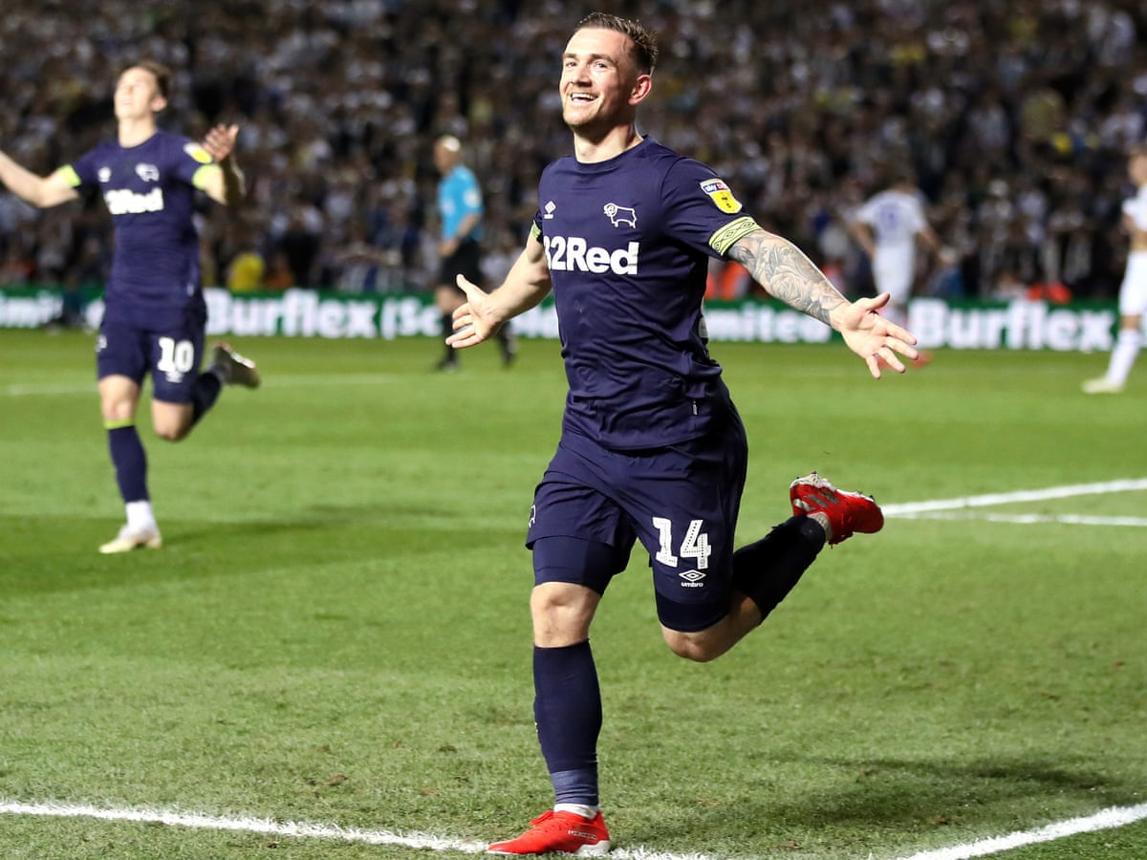
Marriott’s impact was immediate. Frank Lampard had introduced him from the bench, and within moments he had given Derby a route back into the tie. The visitors began the second half with renewed belief and scored again almost straight away, Mason Mount finishing to put Derby ahead on the night and level on aggregate.
The match had changed from one Leeds were managing to one they were chasing. In the 58th minute, Harry Wilson converted a penalty after Cooper pulled Mason Bennett’s shirt in the area. Derby were ahead in the tie for the first time. Dallas restored parity on aggregate in the 62nd minute with his second goal, giving Leeds a brief reprieve, but the scoreline was no longer stable. Every attack seemed capable of turning the evening again.
Red cards, late goal, and the binoculars
Gaetano Berardi was sent off in the 78th minute after a challenge on Bradley Johnson. Leeds had to finish the tie with ten men, and Derby had another opening. Marriott scored his second goal in the 85th minute, taking Derby ahead on aggregate and leaving Leeds needing a goal with their resources reduced. Scott Malone was also dismissed for Derby in stoppage time, but the damage was done. Derby won 4–2 on the night and 4–3 overall.
The reaction made the defeat even harder to separate from the season’s wider story. Derby’s players celebrated by miming binoculars, a pointed reference to the Spygate scandal that had dominated the build-up to their rivalry. In January, a Leeds staff member had been caught watching Derby train before a league meeting. Bielsa then called a press conference and laid out the depth of Leeds’ analysis of opponents, turning the affair into a debate about scouting, gamesmanship and the limits of acceptable preparation. Leeds were fined £200,000 by the EFL, with Bielsa saying he would pay the fine himself.
A story more complicated than Spygate
It is tempting to write the match as revenge for the spying row, or as proof that controversy had distracted Leeds from their football. The truth is more straightforward and more painful: Derby took the chances presented to them, Leeds made crucial errors and the visitors handled the emotional swings better. The binoculars made the scene more theatrical, but they did not score the goals.
Bielsa’s fairness episode against Aston Villa earlier in the season is sometimes mixed into this story. In that separate match, Leeds scored while a Villa player was down injured, and Bielsa instructed his side to allow Villa to equalise. That incident was not part of the Derby play-off tie, but it contributed to the unusual moral debates around Bielsa’s Leeds: the manager was simultaneously willing to expose his own team’s tactics to public scrutiny and willing to accept a goal against his side in the name of fair play.
The cost of another near-miss
For Leeds, defeat meant a sixteenth consecutive season outside the top flight. It was a crushing conclusion because the team had been so close to automatic promotion only a few weeks earlier. The Wigan and Brentford defeats had forced them into the play-offs, and now the final escape route had closed. The season had started with the ambition of automatic promotion and ended with the familiar knowledge that one more year in the Championship was required.
It did not end Bielsa’s time at Leeds. The club and manager went again, and the following season delivered the Championship title and return to the Premier League. That later success changes the emotional shape of the 2019 defeat without making it any less painful. It becomes the last great failure before the breakthrough, rather than the point at which the whole project fell apart.
Why this match mattered
This was one of the defining matches of the Bielsa era because it contained so much of what made Leeds exciting and exhausting to support. They were brave, ambitious and capable of making a team look helpless, but the game also showed their vulnerability when the pressure moved in the opposite direction. One error before half-time, another goal straight after it, a penalty, a red card: a tie that had seemed controlled became chaos.
The Derby match is still remembered because it was more than a lost play-off. It was the close of a season in which the club had felt closer to its future than it had for years. Wembley was within reach; the Premier League was one tie away. At the final whistle, the dream was gone and the binoculars had become another image in Leeds’ long archive of footballing pain. A year later, the same manager and many of the same players would finally finish the job. That is why this defeat matters: it tells the story of how close Leeds came, how far they fell in one night, and how much work remained.