
News
Leeds United 1–0 Barnsley, 16 July 2020: The Own Goal That Left Leeds One Point from the Premier League
The 1–0 win over Barnsley was far from a classic, but it left Leeds one point from promotion. The next evening, West Brom lost at Huddersfield and Leeds’ sixteen-year absence from the Premier League ended without another kick of a ball.

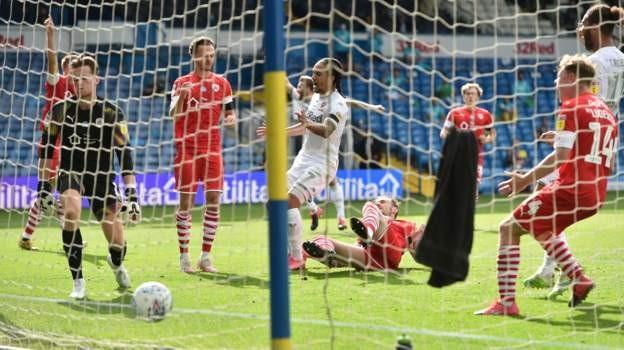
The Own Goal That Left Leeds One Point from the Premier League
One more step
Leeds United’s match against Barnsley on 16 July 2020 was less a celebration than a test of patience. The club had spent the season building towards a return to the Premier League, and by mid-July the finish line was close enough to see. But promotion was not yet confirmed, and history had taught Leeds supporters to be wary of counting anything before the final arithmetic was settled.
The season was being played out under the restrictions of the COVID-19 pandemic. Elland Road was empty, the familiar chorus of the crowd was absent, and football’s most emotionally charged moments were taking place in near silence. A few days earlier, Pablo Hernández had scored late at Swansea to put Leeds in a strong position. Now Barnsley stood between them and the final stage of the journey.
A difficult opponent with everything to play for
Barnsley were fighting for survival and had every reason to make the game awkward. They pressed, contested second balls and tried to keep Leeds away from comfortable positions in the penalty area. Leeds were not at their flowing best. With the stakes so high and the schedule compressed after the restart, the performance became about managing the game, avoiding a mistake and finding one opening that could make the difference.
That is one of football’s less glamorous truths. A season’s defining victory is not always a triumph of beautiful attacking play. Sometimes it is about continuing to apply pressure when the crowd cannot lift the team, trusting the patterns that have taken you this far and accepting that the decisive moment may be scrappy. Leeds were looking for that moment, and in the 28th minute it arrived.
The own goal
Jack Harrison delivered the ball into a dangerous area, and Barnsley defender Michael Sollbauer turned it into his own net. The goal was not a piece of individual brilliance, but Leeds did not need a masterpiece. They needed a lead, and they had one. The score remained 1–0, making the final hour feel much longer than the 28 minutes that had preceded it.
Leeds were obliged to protect the advantage and work through Barnsley’s attempts to find an equaliser. The match lacked the emotion that would normally have filled Elland Road for such an occasion. There was no roar after the ball crossed the line, no stadium shaking with the knowledge that the Premier League was almost within reach. The celebrations were restrained by circumstances, but the importance of the goal was not diminished by the silence.
One point away, but not yet there
At full-time, Leeds had moved within one point of mathematical promotion, with two league fixtures remaining. The win meant they could secure their return to the top flight by taking another point, but events elsewhere would provide the final confirmation before they played again. On Friday evening, West Bromwich Albion lost 2–1 away to Huddersfield Town. That result made it impossible for Leeds to finish outside the top two. Promotion was confirmed.
The way it happened was unusual. A club that had been waiting sixteen years to return to the Premier League did not secure promotion with a dramatic last-minute goal in the match that clinched it, nor with a final whistle after a defining performance. Instead, the key moment came the following evening when another result completed the work. The Barnsley game supplied the victory; Huddersfield supplied the final arithmetic.
Remembering Jack Charlton
The match also carried the recent loss of Jack Charlton, who had died on 10 July. He had been a central figure in Revie’s Leeds, a defender whose stature and reliability made him one of the great servants of the club. Tributes before the game connected a promotion campaign in a new century with the achievements that had helped make Leeds United what they were.
Charlton’s career had included two First Division titles and some of the greatest nights in Leeds history. He belonged to a generation that had established the club among the best in England. The team playing Barnsley was a different group, with different methods and circumstances, but it was still carrying that history. The club was coming back to the top flight, and a figure from its greatest era was being mourned as the return approached.
Why this match mattered
On the pitch, Leeds did what the situation required: they won. The own goal may have lacked glamour, but there is nothing lesser about a result that carries a team to the threshold of a major objective. Promotion campaigns are not judged by whether every performance is memorable. They are judged by whether enough points are collected, and Barnsley provided three crucial ones.
The result also showed how a season can be shaped by the same tension from beginning to end. Leeds had suffered the play-off collapse against Derby a year earlier, but that memory did not guarantee success in 2020. They had to repeat the work, deal with another stop-start campaign and remain focused after the league restarted in extraordinary circumstances. Barnsley were a difficult opponent, the game was tight, and Leeds did not let the occasion overwhelm them.
The final promotion celebrations would come later, at Derby, when Leeds lifted the Championship trophy. But the decisive stretch had already been built by moments such as this: a late goal at Swansea, an own goal at Elland Road, and one more night waiting for the table to confirm what the team had earned. For supporters watching from home, the Barnsley game was the last real test. When West Brom lost, sixteen years of waiting were over.