
News
Sunderland 1–0 Leeds United, 1973: The cup final that shocked the champions
Leeds were favourites to retain the FA Cup, but Ian Porterfield and Jimmy Montgomery helped Sunderland produce one of the competition's great upsets at Wembley in 1973.

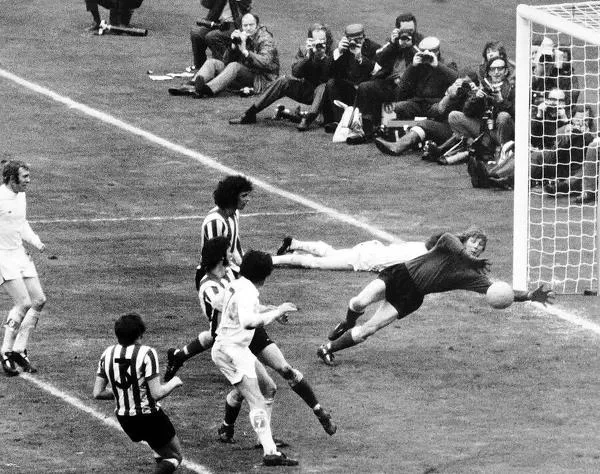
The cup final that shocked the champions
Second Division Sunderland stunned holders Leeds United at Wembley in the 1973 FA Cup final. Ian Porterfield's goal and Jimmy Montgomery's famous double save created one of the competition's great upsets and another painful chapter in Leeds' story of near-misses.
Leeds United arrived at Wembley on 5 May 1973 as overwhelming favourites to retain the FA Cup. Don Revie's side were one of the great teams of their generation: champions of England, winners of the League Cup and Fairs Cup, and a side that had spent years competing for major honours. Sunderland, by contrast, were a Second Division club with a talented but unfancied team. The gulf in reputation was clear. The result would make it irrelevant.
The opening half was tense rather than spectacular. Leeds had more of the ball and were expected to impose their quality, but Sunderland defended with determination and waited for opportunities. In the 31st minute, a corner created the moment that changed the final. The ball reached Ian Porterfield, who struck it into the net to put Sunderland ahead. For a club that had not lifted a major trophy since before the war, it was a goal of extraordinary importance.
Leeds responded by laying siege to Sunderland's goal. The team had the experience, creativity and firepower to turn a final around, and for long periods it seemed only a matter of time before they found an equaliser. But Sunderland goalkeeper Jimmy Montgomery produced one of the most famous sequences of saves in FA Cup history.
Peter Lorimer's shot was turned away, and a follow-up header from Trevor Cherry looked certain to cross the line. Montgomery somehow reached it, then recovered to keep the ball out again. The double save became the image of the final because it captured the spirit of Sunderland's performance: courage, concentration and an almost unbelievable refusal to concede.
Leeds kept pressing, but the equaliser never came. Sunderland won 1–0 and lifted the FA Cup in one of the competition's most celebrated upsets. The result was a triumph for a team that had prepared for the challenge, played to its strengths and refused to be overwhelmed by the occasion.
For Leeds, the defeat hurt for several reasons. They were the holders, and this was a side that believed it could win any competition it entered. The cup was one of the prizes Revie's team had worked hard to secure, and losing it to a Second Division club was a sharp reminder that reputation cannot win a match. The disappointment was magnified by the wider context of the 1972–73 season. Leeds finished third in the league, lost the FA Cup final and were beaten by AC Milan in the European Cup Winners' Cup final later in May.
It would be unfair to frame Sunderland's victory solely as a Leeds failure. The Black Cats earned their place in the history of the competition. Porterfield took the chance; Montgomery delivered under pressure; the team defended with outstanding resilience. The giant-killing worked because Sunderland were good enough to make it happen.
But for Leeds supporters, the final became one of the defining examples of how cruel football can be. A dominant side can be undone by one corner and one outstanding goalkeeper. A season full of quality can end with disappointment. Even a club that appears to have the superior team must prove it for 90 minutes.
The match also made the 1974 championship more significant. Leeds responded to the disappointments of 1973 by producing a 29-match unbeaten league start the following season and winning the First Division title. The Sunderland defeat did not destroy Revie's team. It became part of the memory against which the next success was measured.
Sunderland's cup triumph deserves to be celebrated on its own terms. Leeds' place in the story is the other side of the same coin: the reminder that past achievements guarantee nothing, and that even the greatest teams sometimes have to live with the result they least expected.