
News
Sheffield Wednesday 1–6 Leeds United, 1992: The day Chapman's hat-trick put Leeds back on top
Leeds delivered one of the great performances of their title-winning season at Hillsborough. Chapman’s hat-trick, Dorigo’s free-kick and further goals from Whitlow and Wallace made it 6–1 and sent Leeds top.

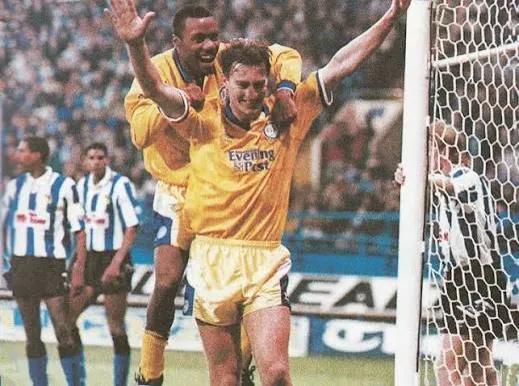
The day Chapman's hat-trick put Leeds back on top
Lee Chapman scored a hat-trick at Hillsborough as Leeds dismantled Sheffield Wednesday 6–1 and returned to the top of the First Division. It was more than a derby-day demolition: it was proof that Howard Wilkinson's team could play with power, speed and ruthless attacking quality in the title race.
There are victories that make a title challenge feel real. Leeds United's 6–1 win at Sheffield Wednesday on 12 January 1992 was one of them. The scoreline was emphatic, the venue added a Yorkshire edge, and Lee Chapman's hat-trick gave the afternoon a natural central character. Leeds returned to the top of the First Division, and any lingering idea that Wilkinson's side were merely grinding their way through the campaign had to be reconsidered.
The season was the last of the old First Division before the Premier League era began. Leeds were seeking their first league championship since Don Revie's side won in 1973–74, and they were doing so only two seasons after promotion from the Second Division. That was a remarkable position for a club which had spent the 1980s trying to recover from relegation. Wilkinson's rebuild had already produced a fourth-place finish in 1990–91; now the team was challenging for the title itself.
The contest began with Leeds showing the intent of a side that wanted to set the terms. Chapman scored early, and Tony Dorigo doubled the advantage with a superb free-kick. Sheffield Wednesday pulled one back through John Sheridan's penalty, but Leeds did not allow the game to become uncertain for long. Chapman scored again before the interval, restoring a two-goal cushion and changing the mood of the contest.
The second half brought more of the same. Chapman completed his hat-trick, taking his tally into double figures and giving Leeds a centre-forward performance that combined timing, movement and finishing. Mike Whitlow added another, and Rod Wallace completed the six-goal haul late on. Leeds had scored six at Hillsborough against a side of their own division, and had done so in a match that was as much a title-race marker as a local rivalry.
The win's significance was heightened by the league context. Manchester United were still Leeds' principal rivals, and the teams had spent much of the season exchanging positions at the top. Every substantial result mattered, because neither club could afford to let the other create a gap. A six-goal away victory was not worth more points than a narrow win, but it sent a message about Leeds' capacity to dominate matches rather than simply endure them.
Chapman deserves the headline, but the performance was collective. Dorigo's goal was a reminder of the quality Leeds had from set pieces and long range. Wallace's movement and the work of the midfield helped create the space for Chapman to thrive, while Wilkinson's team retained enough discipline to avoid being dragged into a scrappy contest after Wednesday scored. Leeds could be physical, but this was a performance of footballing authority.
It is useful to remember this match when the 1991–92 title is described as an unlikely triumph built on hard work and little else. Leeds were hard-working, but they also had genuine attacking quality. They scored three or more goals in a significant number of league matches that season, and the Hillsborough result showed the range of their threat. The team could be patient when necessary, but it could also overwhelm an opponent when the game opened up.
The 6–1 win was not the title clincher, and the season still had several tense chapters ahead. Leeds would experience difficult defeats and see Manchester United repeatedly threaten to pull away. But the Hillsborough afternoon gave the side momentum and a place at the top of the table. It was a result that helped shape the supporters' belief that this could be the year when the long wait ended.
The match also has a particular resonance because Chapman had previously played for Sheffield Wednesday. To return to Hillsborough and score three times against a former club is the sort of detail that makes a great scoreline feel personal. The local element was real, but the performance was bigger than the rivalry. Leeds were beginning to look like champions, and on this afternoon they played like it.
By the end, the scoreboard made the message unmistakable: Leeds had won 6–1 away from home and moved back to the summit of English football. It was one of the most convincing statements of their title campaign, and one of the games that makes the 1991–92 side worth remembering as more than a team that simply made Manchester United stumble. They had power, craft and the ability to take a match away from the opposition.