
News
Liverpool 4–3 Leeds United, 12 September 2020: Back in the Premier League, and Nobody Was Easing Us In
The first Leeds Premier League game since 2004 was a seven-goal thriller at Anfield. Leeds were beaten by a late Mohamed Salah penalty, but their fearless display made an immediate statement about how Marcelo Bielsa intended to approach the top flight.

Back in the Premier League, and Nobody Was Easing Us In
Sixteen years in the making
When Leeds United walked out at Anfield on 12 September 2020, the fixture was more than the opening weekend of another Premier League season. It was the end of a sixteen-year absence, a return that had required financial survival, years in the Championship, a spell in League One, and then two seasons of rebuilding under Marcelo Bielsa before promotion was finally achieved.
The opponents were not an accommodating welcome party. Liverpool were the reigning champions, a team that pressed hard, attacked quickly and had turned Anfield into one of the most difficult places in Europe to visit. The match was played behind closed doors during the COVID-19 period, so there was no roar from the home crowd or chorus from travelling Leeds supporters. The occasion felt strange, but the football quickly became anything but quiet.
Salah strikes first, Leeds hit back
Liverpool were awarded a penalty in the fourth minute after Robin Koch’s arm was struck by the ball following a deflection. Mohamed Salah converted, and Leeds’ return began with the sort of early setback that can make a promoted team retreat into its shell.
Leeds did not retreat. Kalvin Phillips found Jack Harrison in space, and Harrison cut inside before finishing superbly to make it 1–1. It was a goal that expressed the confidence of Bielsa’s side: win the ball, move quickly, take on a defender and attack the goal. Virgil van Dijk headed Liverpool back in front from a corner, but Leeds equalised again when Patrick Bamford took advantage of a defensive error and finished past Alisson.
Champions push, Leeds answer
Salah scored again before half-time to give Liverpool a 3–2 lead. The Egyptian forward was already the most dangerous player on the pitch, and the champions had shown how quickly they could punish even a brief lapse. Leeds, however, continued to create chances and refused to treat the scoreline as an instruction to abandon their attacking plan.
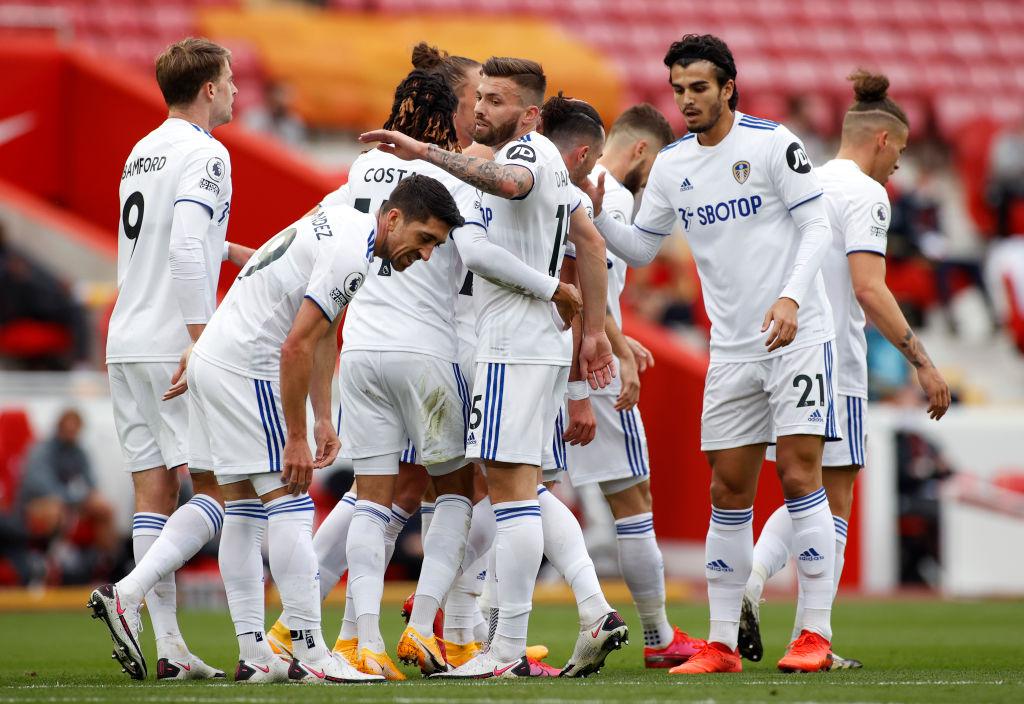
The second half brought more pressure from Liverpool, with Illan Meslier called upon to make important saves. Leeds also had a second goal ruled out for offside, but they found another way back into the game in the 66th minute. Mateusz Klich controlled the ball in the area and volleyed home after Hélder Costa’s delivery. At 3–3, Leeds had done something rare for a newly promoted side at the home of the champions: they had answered every punch.
A penalty decides it
The final stages were tense, and Liverpool's quality eventually made the difference. Rodrigo, making his Premier League debut for Leeds after coming on as a substitute, brought down Fabinho in the area. Salah converted the penalty in the 88th minute to complete his hat-trick and win the match 4–3.
There was no point for Leeds, and the table would not award anything for a brave performance. They had conceded four goals and lost. Yet the manner of the defeat mattered. Leeds were not outclassed into submission, nor had they tried to escape Anfield with a narrow loss. They had played the reigning champions at their own high tempo, traded attacks and come within moments of taking a point.
What the performance told us
The match quickly became a statement of identity. Bielsa’s teams were known for man-to-man pressing, intense running and an insistence that the opponent should not be allowed comfortable possession. In the Championship, that approach had made Leeds thrilling to watch and hard to prepare for. The question was whether it could work against the very best teams in the country.
Liverpool showed that the Premier League would punish mistakes more ruthlessly than the Championship. Their movement and speed were elite, and Salah’s finishing left no room for the kind of defensive lapse Leeds could sometimes survive at a lower level. But Leeds also demonstrated that their style could trouble a champion. Harrison, Bamford and Klich scored three excellent goals, and the match was competitive until the late penalty.
There was a wider historical irony in the fixture. Leeds had last played in the Premier League in 2004, when the club’s ambition had turned into financial crisis. The intervening years had been filled with painful reminders that history and reputation could not protect a club from poor decisions. Returning to Anfield as champions’ opponents was not the completion of every ambition, but it was a visible sign that Leeds had rebuilt their place in English football.
Why this match mattered
This was a defeat that felt like an arrival. It mattered because it opened Leeds’ new Premier League era in full view of a national audience, and because the performance showed that Bielsa would not change the team's personality simply because the opponents wore the champions’ badge. A newly promoted side could have defended deep, slowed the game and accepted that a point would be a fine start. Leeds instead took the fight to Liverpool.
The result also set the tone for the season. Leeds would go on to finish ninth, scoring freely and producing several remarkable performances, while learning the cost of small errors against stronger opponents. The Anfield game was the first lesson and the first celebration of what made them special, all inside ninety minutes.
Supporters had waited sixteen years to see Leeds in the Premier League again. They could hardly have asked for a more Leeds opening: goals, drama, frustration, a late penalty and the feeling that the team had come back not to make up the numbers but to compete. The three points belonged to Liverpool. The impression Leeds left behind was their own.