
News
Liverpool 0–0 Leeds United, 1969: The night Revie's project became champions of England
A goalless draw at Anfield gave Leeds United their first top-flight title. The match was the quiet finish to a remarkable season of consistency and a long project under Don Revie.

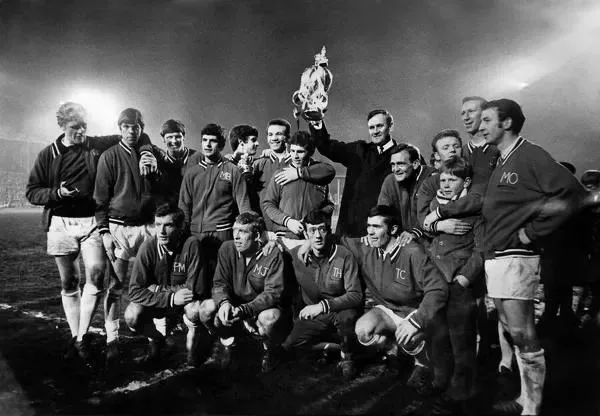
The night Revie's project became champions of England
Leeds needed a result at Anfield to complete the work of years. A tense goalless draw against Liverpool secured their first First Division title and transformed the club's standing in English football.
A championship is usually remembered through its goals. The decisive header, the last-minute winner, the captain lifting the trophy. Leeds United's first league title came through a match that offered none of those conveniences. On 28 April 1969, they went to Anfield and drew 0–0 with Liverpool. The scoreline looked ordinary. Its meaning was anything but.
Don Revie's Leeds had spent the previous five seasons establishing themselves as one of the strongest sides in the country. They had finished runners-up in 1964–65, level on points with Manchester United but separated by goal average, then finished second again in 1965–66. They reached finals and semi-finals, won the League Cup and the Fairs Cup, and kept returning to the league race without completing it. For all the talk of their strength, there remained a question only the title could settle: could they finish first?
The 1968–69 campaign answered it with relentless consistency. Leeds won 27 of their 42 league matches, drew 13 and lost only twice. They scored 66 goals and conceded 26, and remained unbeaten at Elland Road throughout the campaign. Allan Clarke's arrival added another dangerous forward to a side already built around the fierce competitive spirit of Billy Bremner, the defensive authority of Jack Charlton and Norman Hunter, and the ability of Johnny Giles, Eddie Gray and Peter Lorimer to create and finish chances.
Liverpool were not convenient opponents for the decisive match. They were an established power under Bill Shankly, with a strong defence and a crowd that could make Anfield an intimidating place to visit. Leeds had to complete the championship away from home, against a club whose own ambitions made the result matter to the opposition as well as to Revie's team.
The game was tense rather than expansive. Leeds did what they had done throughout the season: kept their organisation, stayed difficult to break down and refused to let the occasion overwhelm the plan. The match finished 0–0. The point was enough. Leeds were champions of England for the first time.
The title meant more than a line in the honours list. It validated Revie's long reconstruction of the club after the dangers of the early 1960s. It rewarded a group of players who had lived through those near-misses and turned them into a standard of performance. It also offered a final answer to the caricature of Leeds as a side that could fight, intimidate and compete but not quite win the league.
The image often attached to the night is of Liverpool supporters acknowledging Leeds as champions, with stories of the Kop applauding or chanting the visitors' name. As with many memories from football's older eras, accounts of the precise scene vary. What matters is the central truth: even at a ground where Leeds were the opposition, the achievement was difficult to dispute. The team had finished above everyone else over a full season.
There is an irony in the fact that the first top-flight title was secured without a goal. It suits Revie's side. This was a team that could win beautifully, but it could also defend, manage and grind. A title is not the sum of a club's prettiest moments. It is the cumulative result of thousands of small decisions made well enough, week after week, to end with the best points total.
For Leeds supporters, Anfield 1969 was the day years of promise became history. The title did not end the story of Revie's side. In many ways, it began its most famous chapter. Leeds would continue to contend for domestic and European honours, experience further near-misses and win a second First Division title in 1974. But the first championship could never be repeated in precisely the same way.
It was the first time Leeds had stood above every club in England. The scoreboard said 0–0. The record book said champions.