
News
Leeds United 4–1 Huddersfield Town, 10 September 1960: A Flash of Light in the Second Division Quagmire
A convincing 4–1 win over Huddersfield Town in September 1960 briefly lifted the gloom around Leeds United, but the club was still lost in the footballing wilderness.
A Flash of Light in the Second Division Quagmire
The harsh reality of the second tier
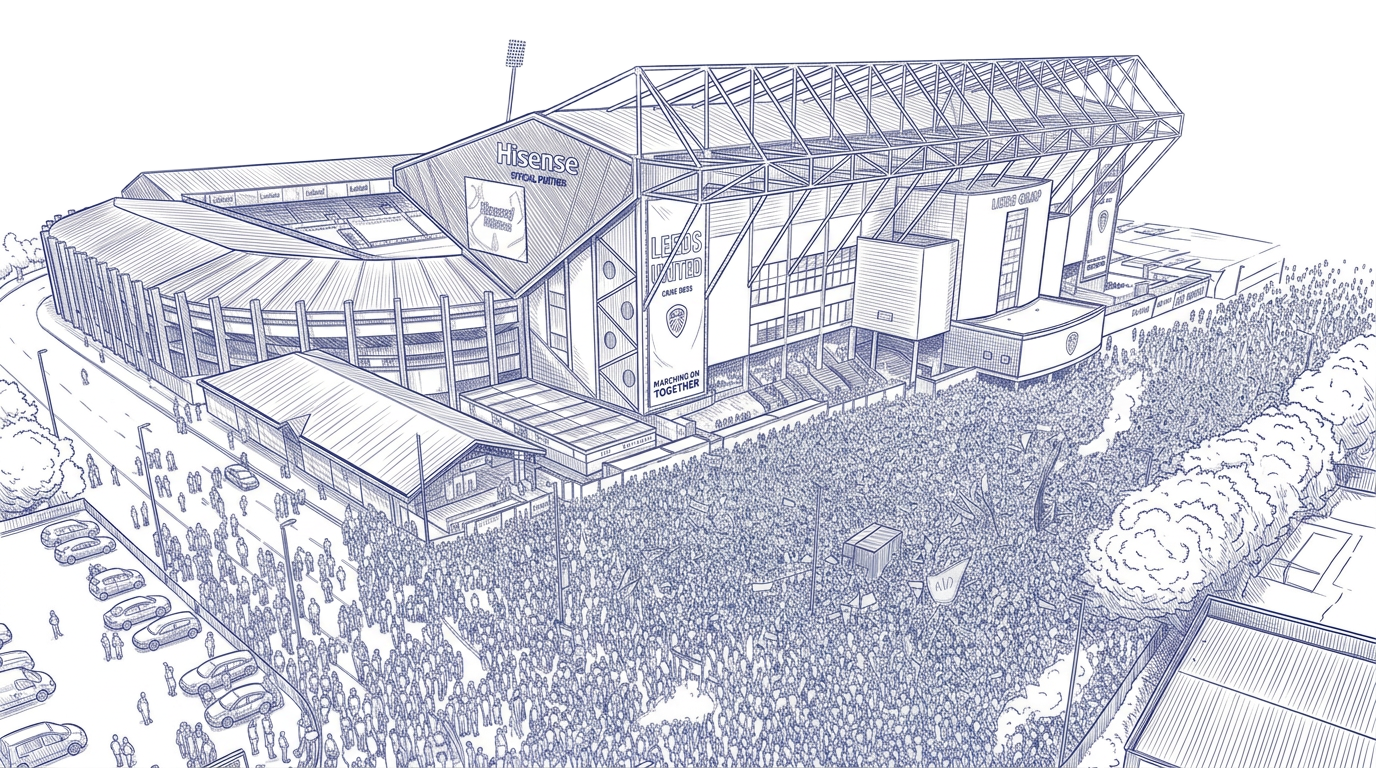
By September 1960, the optimism of a swift bounce back to the First Division had evaporated. Jack Taylor's team was struggling to adapt to the physical, attritional nature of Second Division football. Elland Road, once a cauldron of noise and hostility, now echoed with sparse crowds and disillusioned silence.
On Saturday 10 September 1960, Huddersfield Town arrived in West Yorkshire for a local derby that many expected to compound the misery. Instead, the 22,146 supporters inside the ground witnessed one of the few genuinely uplifting afternoons of the season.
Cameron leads a four-goal burst
From the opening minutes, Leeds played with a freedom that had been missing for months. Bobby Cameron converted a penalty as Leeds took command, and the team built on the platform with a ruthless attacking display that Huddersfield could not withstand.
The visitors were swept aside as Leeds ran out comfortable 4–1 winners. For ninety minutes, the club looked like the team its history demanded: direct, confident, and superior to its opponents in every department. The relief around the ground was palpable.
But the performance was a flash rather than a fire. In the weeks that followed, the old problems returned with a vengeance: defeats to Derby, Stoke, and Charlton would drag the club back down towards the bottom half, and the empty seats began to reappear.
Why this match mattered
The 4–1 win over Huddersfield Town was emblematic of the dark days preceding Don Revie's appointment. It proved that simply dropping a division does not automatically guarantee recovery; without a strong identity and fierce discipline, a fallen giant can produce one-off performances and still drift towards permanent obscurity. The talent was occasionally there. The direction was not.