
News
Leeds United 3–3 Charlton Athletic, 2004: The farewell that turned sour
A 3–3 draw, relegation already confirmed, and a pitch invasion to thank Alan Smith. Days later, his move to Manchester United turned one of Leeds’ most emotional farewells into a lasting controversy.

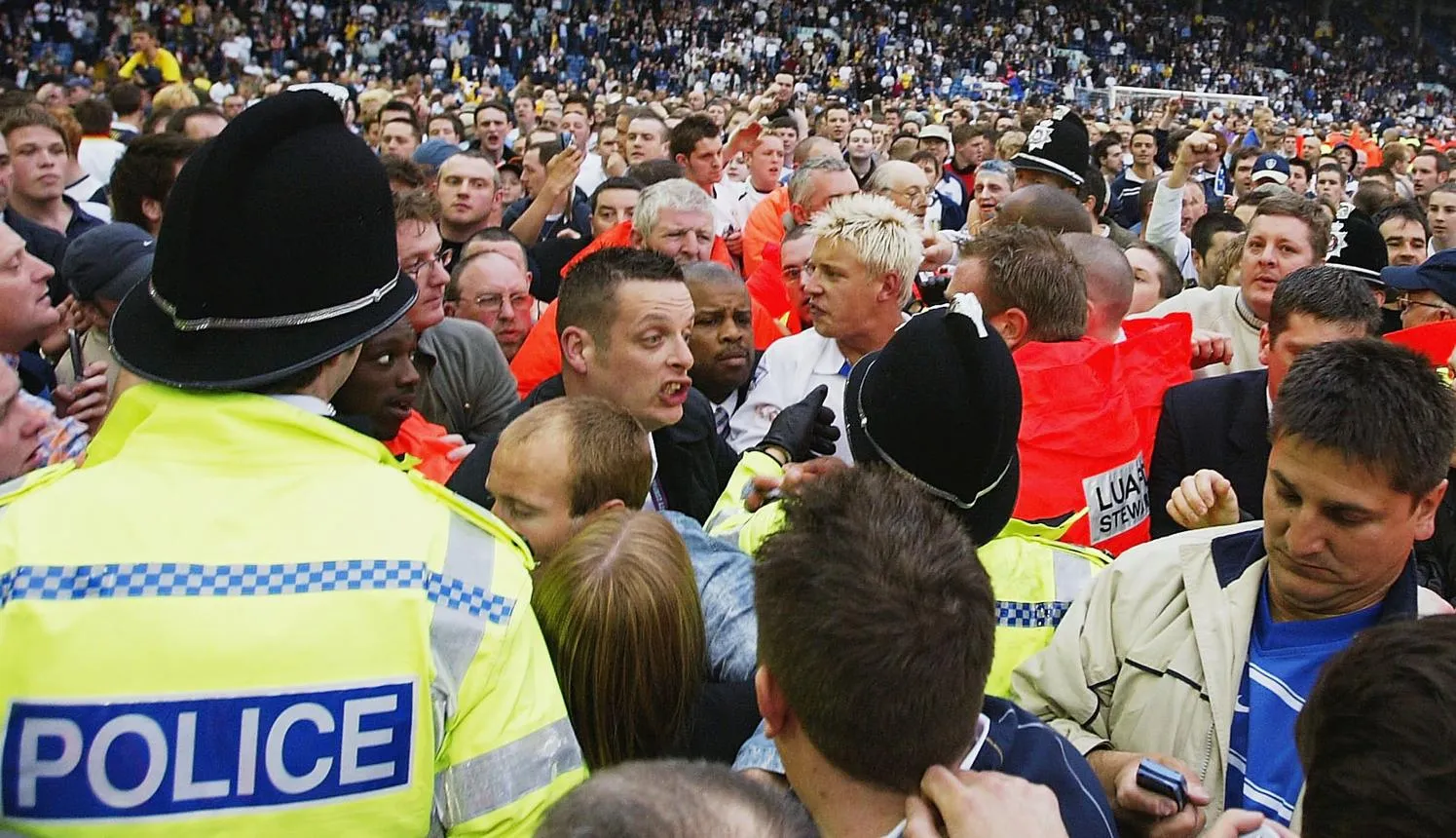
The farewell that turned sour
Relegation had already been confirmed, but the final home match became an emotional farewell to Alan Smith, the local striker who had given everything during the club’s decline. Supporters flooded the pitch after the 3–3 draw to show their affection. Within weeks, that affection would turn into one of the most bitter ruptures in modern Leeds history.
By the time Charlton Athletic arrived at Elland Road on 8 May 2004, Leeds United’s relegation from the Premier League had become all but unavoidable. A 4–1 defeat at Bolton the previous weekend had left the club facing almost certain relegation, and the Charlton match would formally confirm the fall. For a club that had reached the Champions League semi-final only three years earlier, it was a brutal confirmation of how far it had fallen.
The final home match was supposed to be a chance to say goodbye to a Premier League era that had once carried enormous promise. Instead, it became a raw and confusing moment in the club’s relationship with one of its most beloved players. Leeds drew 3–3 with Charlton, and after the final whistle supporters spilled onto the pitch and gathered around Alan Smith, showing the affection they still felt for a striker who had fought relentlessly for the club.
A chaotic final home game
Charlton took the lead through Matt Holland in the 11th minute. Leeds responded through Matt Kilgallon, who equalised in the 29th, and Jermaine Pennant then put the home side ahead shortly before half-time. The match briefly offered a sense of escape from the bleakness of the season: young players were still capable of producing moments, and supporters were still willing to respond to them.
Smith converted a penalty in the 69th minute to make it 3–1, but Charlton refused to go away. Jason Euell scored from the spot and then equalised three minutes later, completing a late comeback and leaving the match level at 3–3. The result was a fair reflection of a game that had swung from one side to the other, though the scoreline was secondary to the emotion around it.
Smith had become a symbol of the club’s local identity and its struggle. Born in Rothwell and developed at Leeds, he had grown from a combative young player into an England international. He had shown commitment during a period when financial crisis and departures threatened to pull the club apart. For many supporters, his work-rate and visible attachment to the shirt had made him a rare source of certainty in an increasingly uncertain club.
The pitch invasion and the goodbye
After the final whistle, supporters came onto the pitch and surrounded Smith. The scene was not simply a celebration of a player’s statistics. It was an attempt to express gratitude and affection at a moment when the club was losing its place among the country’s leading sides. Smith was visibly emotional, and for a brief spell the usual hostility of relegation gave way to a shared sadness.
The timing made the moment especially poignant. Smith was widely expected to leave, as the club needed to reduce costs and the Premier League’s relegation would intensify the pressure on its finances. Yet the pitch invasion showed that supporters did not see him as merely another asset to be sold. He was one of their own, someone who had taken the difficult seasons personally and had not hidden from the fight.
A transfer that changed the memory
Within days, that affection was replaced by anger when Smith made clear his willingness to join Manchester United. He completed the controversial move that summer, crossing a rivalry line that many Leeds supporters regarded as unforgivable. The reaction was intense because the move appeared to invert the emotion of the Charlton afternoon: the player who had just been surrounded by supporters in a show of gratitude was now joining the club they most resented.
The reality was complicated. Leeds were in financial difficulty and needed transfer income. Smith had spent years giving effort to the side and was facing a career decision under difficult circumstances. His move to Manchester United was a sporting and personal choice, but it was also a reminder that the relationship between a club and a player can be shaped by loyalty, money, opportunity and the way a departure is handled. Supporters are not required to be detached observers of those decisions; they experience them as part of the club’s story.
It would be too neat to say that the affection of 8 May was false or that the anger afterwards erased what Smith had done for Leeds. Both were real. The pitch invasion expressed gratitude for his commitment during a desperate season. The fury at his next destination reflected the depth of the rivalry with Manchester United and a sense of betrayal that was sharpened by the timing.
The 3–3 draw therefore matters for reasons that extend beyond the six goals. It marked the end of Leeds’ Premier League stay, captured a fanbase grieving the loss of status and produced one of the most emotionally charged scenes in the modern club’s history. In a matter of days, a farewell became a rupture. The match remains a reminder that football memory is never made from results alone; it is also made from the relationships between players and the people who sing their names.