
News
Leeds United 1–0 Arsenal, 1968: The day Leeds won their first major trophy
Leeds United's 1968 League Cup final win over Arsenal was the first major trophy of Don Revie's reign and an early landmark in the making of a great team.

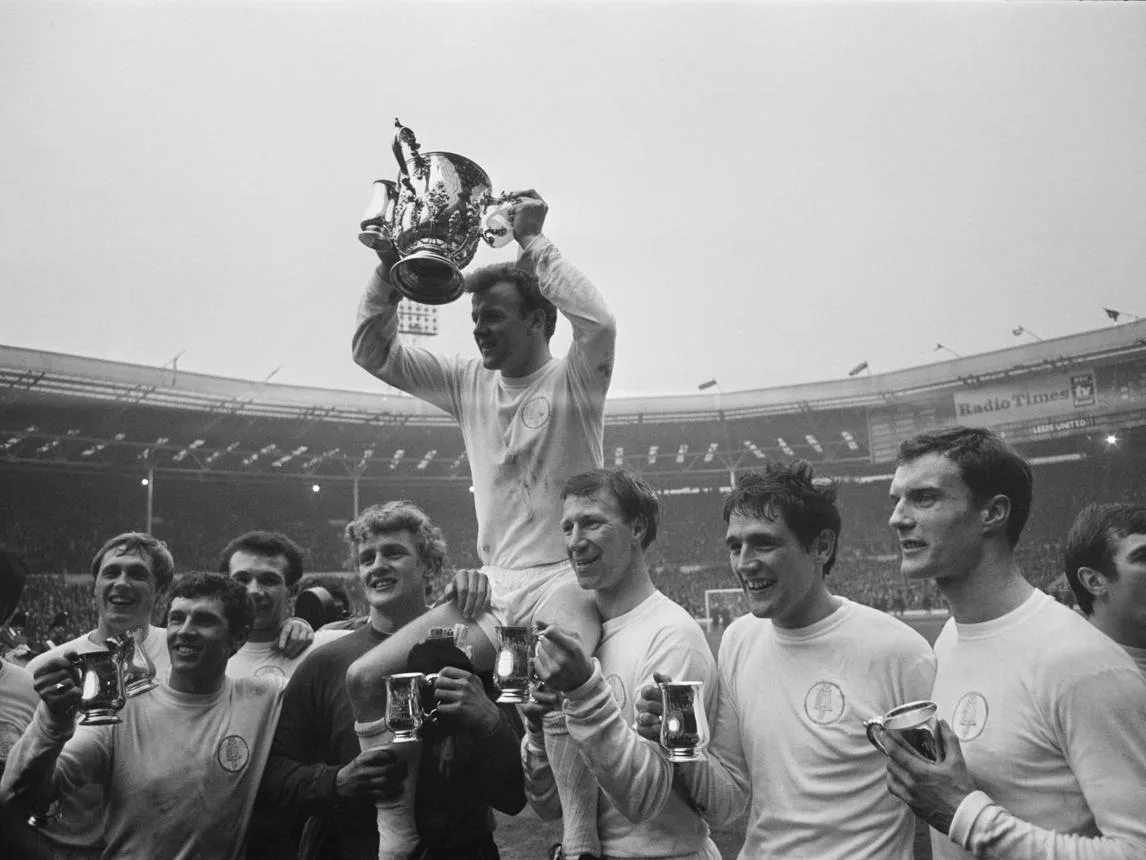
The day Leeds won their first major trophy
Terry Cooper's goal at Wembley delivered the first major trophy of Don Revie's Leeds United reign. It was a cup final that announced the team was ready to turn promise into silverware, and the opening chapter of a period that would change the club forever.
On 2 March 1968, Leeds United walked out at Wembley to face Arsenal in the League Cup final. Don Revie's side were becoming one of the strongest teams in England, but there was an important difference between being admired and being remembered as winners. Leeds had spent years building towards the top, only to find that the final step demanded something else. Wembley offered the chance to cross it.
The match was not a festival of attacking football. It was a tense, hard-fought final between two well-organised sides, and it was decided by one goal. After around 20 minutes, Eddie Gray's corner was not dealt with cleanly by Arsenal's defence. The ball fell to Terry Cooper, whose powerful volley found the net. It was an unfussy goal, struck by a full-back rather than one of the side's celebrated forwards, but it was exactly the sort of moment that could alter the course of a club's history.
Arsenal protested that the goalkeeper had been impeded in the build-up. The goal stood. Leeds then did what Revie's teams were learning to do better than almost anybody: protect an advantage through discipline, collective responsibility and an unwillingness to be drawn out of shape. Arsenal pressed and enjoyed periods of possession, but Leeds held on to win 1–0.
The significance was larger than the League Cup itself. This was the first major trophy of Revie's managerial career at Elland Road, and a reward for the careful reconstruction he had begun after taking charge in 1961. Leeds had survived their near-relegation crisis, won promotion to the First Division in 1964 and established themselves among the leading clubs. Now there was tangible proof that the project could finish with a trophy lifted above the players' heads.
The names in that Leeds side would become part of the club's folklore. Billy Bremner supplied the drive and edge. Jack Charlton and Norman Hunter gave the defence authority. Johnny Giles and Paul Madeley helped knit the team together. Peter Lorimer offered a right foot capable of changing any match, while Eddie Gray's ability to glide past opponents supplied a different kind of danger. Cooper's winning goal was a reminder that Revie's side was not simply a collection of stars. The whole team had a part to play.
There were bigger prizes still to come. Later in 1968 Leeds won the Inter-Cities Fairs Cup, then the First Division championship in 1969. The League Cup final did not make them the finished article, but it changed the way their progress could be judged. After years of building a reputation, Leeds had won something that could not be dismissed as promise or potential.
For supporters, the first major trophy matters because every era needs a beginning. The later triumphs of 1969, 1972 and 1974 can make Revie's rise look inevitable when viewed backwards. It was not. There were defeats, controversy, difficult seasons and plenty of chances to lose faith. The League Cup win was one of the first moments when the future became visible.
Cooper's volley did not merely settle a final. It gave a young, ambitious Leeds United side the proof that its methods could deliver at Wembley. A team that would soon be chasing the biggest prizes in England and Europe had taken its first major step.