
News
Birmingham City 1–0 Leeds United, 11 May 1985: The Darkest Day: Tragedy, Riot, and the Human Cost at St Andrew’s
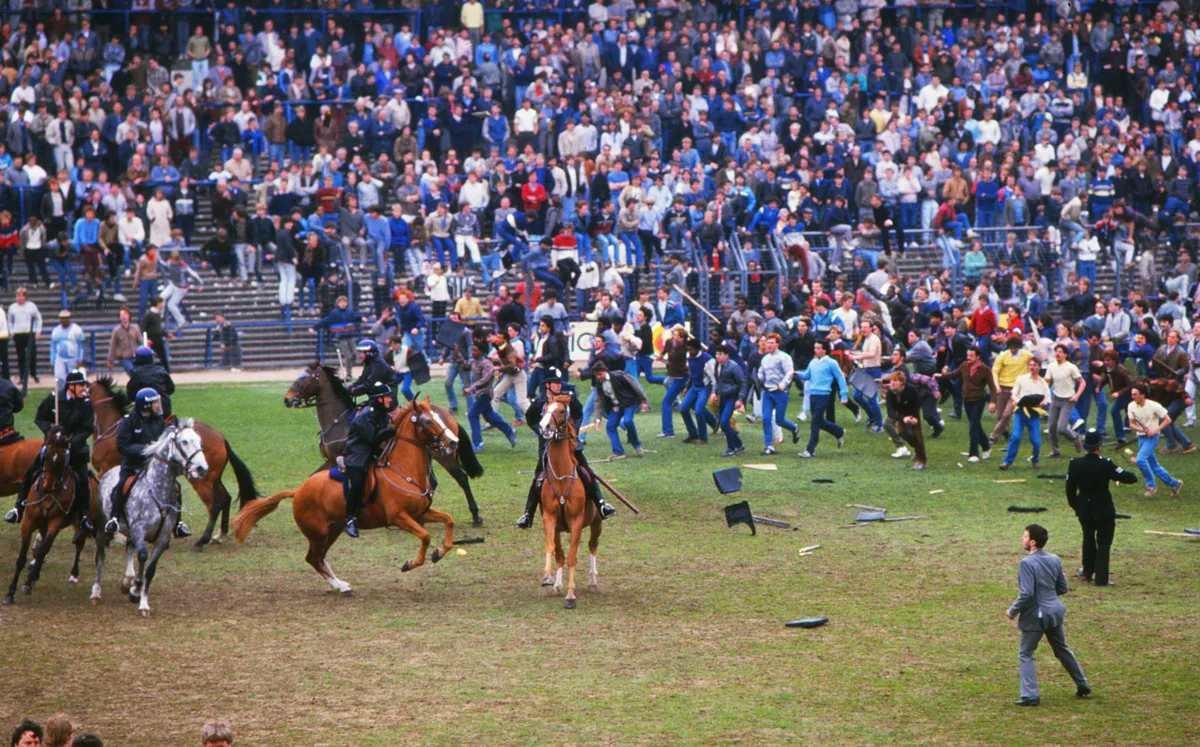
On 11 May 1985—a date forever etched into football history for the Bradford City stadium fire—scenes of unimaginable violence erupted at St Andrew’s during Birmingham City’s match against Leeds United. Amid a full-scale riot that injured over 140 police officers, 15-year-old bystander Ian Hambridge tragically lost his life when a stadium wall collapsed. This article reflects on a defining and heartbreaking low point, centered on the human consequences.

The Darkest Day: Tragedy, Riot, and the Human Cost at St Andrew’s
A day of national footballing sorrow
Saturday 11 May 1985 should have been remembered simply as the final day of the Football League season. Instead, it remains one of the darkest, most harrowing weekends in the history of British sport. While the football world watched in horror as a devastating fire swept through the main stand at Bradford City, another catastrophic tragedy was unfolding in the Midlands at Birmingham City’s St Andrew’s ground, where Birmingham were hosting Leeds United.
The match itself—a 1–0 victory for Birmingham courtesy of a late goal—was rendered entirely meaningless by the events that occurred on the terraces and outside the stadium. What took place was not a mere football fixture, but an explosion of hooliganism that a senior police officer later described as resembling "the Battle of Agincourt rather than a football match".
The breakdown of order at St Andrew’s
Tensions had simmered before kick-off, fueled by the aggressive rivalries of the era and the high stakes of the fixture. As the game progressed, violence boiled over between rival factions held in the Tilton Road end, with a thin blue line of police officers attempting to maintain order under a barrage of heavy missiles, broken seats, and coins.
The scale of the disorder overwhelmed normal security protocols. More than 145 police officers were injured during the afternoon, dozens of fans required hospital treatment, and property around the stadium was extensively damaged. It was an ugly manifestation of the dark hooligan culture that was strangling English football during the mid-1980s.
The tragic loss of Ian Hambridge
Amid the chaos and violence outside the ground, a terrible tragedy occurred that would scar a family forever. A massive 12-foot brick boundary wall collapsed under the pressure of surging crowds and violent clashes, crashing down onto parked cars and bystanders.
Standing near the wall was 15-year-old Ian Hambridge. Ian, a schoolboy from Northampton who was a keen rugby player and not even a regular football fan, had simply wanted to experience his first-ever football match. Caught in the wrong place at the wrong time as the rioting escalated, he suffered severe head injuries and tragically passed away the following day.
In the harrowing weeks that followed, Ian’s death was often eclipsed in the national consciousness by the staggering loss of life at Bradford City on the very same afternoon, and later by the Heysel Stadium disaster. For his parents, Vic and Anne Hambridge, Ian became a "forgotten victim" of football’s darkest era. Yet their response was defined not by bitterness, but by profound forgiveness and grace, remembering a mischievous, bright teenager whose life was cut short by mindless violence.
Why this match mattered
The events of 11 May 1985 at St Andrew’s forced English football to confront its deepest moral failure. For Leeds United, a club with a proud, passionate fanbase, the association with the violent riots was a profound stain that demanded deep introspection and societal change.
This match is remembered not for the scoreline or the league table, but as a solemn human tragedy. It serves as an enduring reminder that football is ultimately secondary to human life, and that the cost of unchecked hooliganism claimed an innocent young life whose memory deserves never to be forgotten.