
News
Which Leeds United player has scored against the most different clubs?
Peter Lorimer scored against 57 different clubs for Leeds United, more than any player in the supplied historical record. From European giants to lower-league opponents, the list reveals the reach of a long Leeds career.
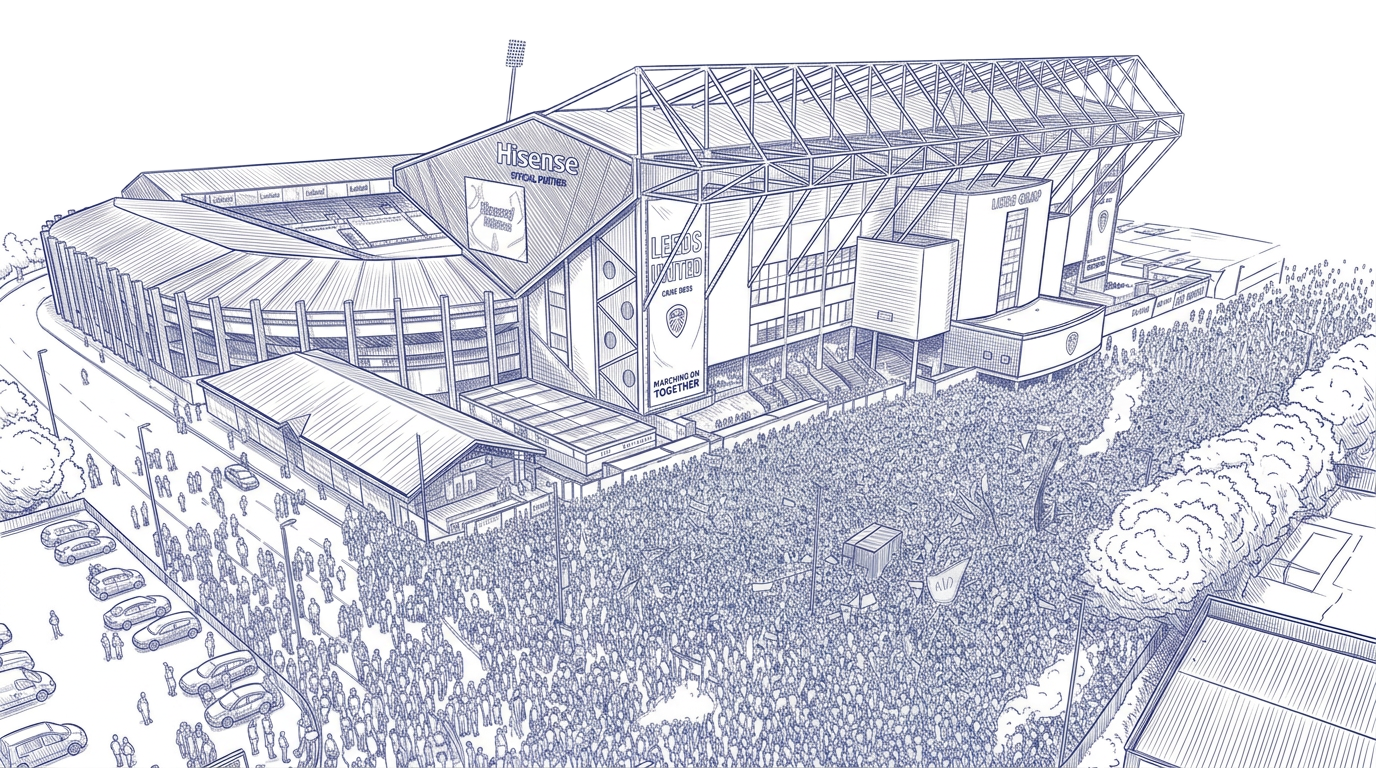

The answer: Peter Lorimer, against 57 different clubs
Peter Lorimer holds the record, scoring against 57 different clubs for Leeds United across domestic leagues, cup competitions and European campaigns in the historical dataset used here. He sits ahead of Luciano Becchio, who scored against 49 different opponents, and Billy Bremner, who scored against 47.
It is an unusual way to measure a striker's or midfielder's contribution. Goals scored is the obvious number, and total appearances tell us how long a player served. But the number of different opponents a player scores against captures something else: variety. It recognises the player who keeps finding a way to score as the opposition changes, from established top-flight sides to unfamiliar cup opponents, from league campaigns to the pressure of Europe.
Lorimer's record is especially fitting because his career crossed so many versions of Leeds United. He came through as a young player, became an important part of Don Revie's great side, played in domestic and European campaigns against leading clubs, left, and returned for a later chapter. His goals were not confined to one short burst of form or one competition.
The ten Leeds scorers with the widest spread of opponents
| Rank | Player | Different opponents scored against |
|---|---|---|
| 1 | Peter Lorimer | 57 |
| 2 | Luciano Becchio | 49 |
| 3 | Billy Bremner | 47 |
| 4 | John Charles | 42 |
| 5 | Charlie Keetley | 41 |
| 6 | Johnny Giles | 39 |
| 7 | Jack Charlton | 39 |
| 8 | Jim Storrie | 36 |
| 9 | Allan Clarke | 36 |
| 10 | Tom Jennings | 35 |
The list contains several different kinds of Leeds goalscorer. John Charles and Jack Charlton were not conventional modern forwards; both could contribute goals from positions where their primary task was not to finish attacks. Billy Bremner and Johnny Giles were midfielders, influential in the construction of play as well as its conclusion. Lorimer's power and Becchio's penalty-box instincts were different again.
That range is precisely what makes the statistic interesting. It is not simply a list of the club's most prolific strikers. It rewards the ability to score across a varied schedule, and it includes players whose goals came in very different footballing eras.
Lorimer's 57: from European nights to domestic grind
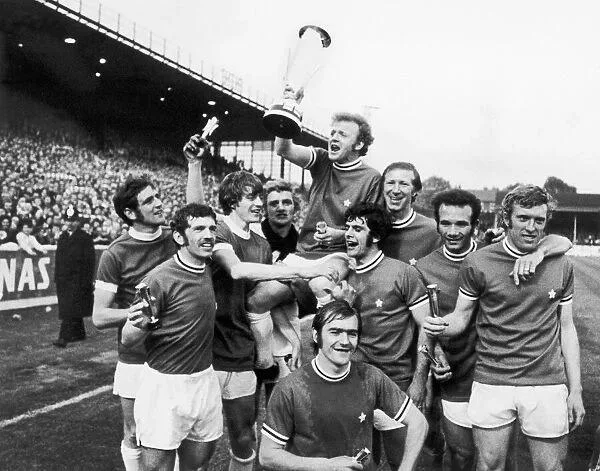
Lorimer's Leeds career spanned matches against some of the most famous clubs in Europe and an enormous range of opponents in English football. Barcelona and Juventus sit comfortably beside Preston and Southport in the record's examples. That breadth matters because cup football repeatedly sends a club into unfamiliar territory. A player who appears in many seasons and competitions has more opportunities to score against different clubs than a player whose career is shorter or restricted to one division.
Lorimer's left foot was one of the defining weapons of Revie's side. He could score from distance, strike dead balls and punish a defence that gave him too much space. But an individual goal record is never only a story of technique. It also reflects the way a team creates chances, the players who supply the ball and the number of competitive matches a player is available to play.
The record should therefore not be mistaken for a perfect rating of finishing ability. It is a record of range. The fact that Lorimer leads this particular ranking says that his goals travelled widely across Leeds' football history.
Becchio and the great EFL tour

Luciano Becchio's 49 opponents provide a fascinating modern contrast. His Leeds career fell during the League One and Championship years, when the club regularly faced a broad mix of opponents and had to fight its way back towards the Premier League. Becchio became a key goalscorer during that period, with an instinct for arriving in the right place and turning pressure into a finish.
The EFL pyramid creates a different map of opposition to the one faced by a club spending most of a decade in the top flight. Promotion races bring repeated matches against clubs with different histories, grounds, styles and defensive approaches. Cup draws add still more variation. Becchio's total shows that a prolific Leeds forward can build a wide range of opponents even outside the club's most celebrated eras.
The modern notes in the source dossier also identify Jermaine Beckford and Ross McCormack as having scored against more than 30 different opponents. Both were prominent goalscorers during the EFL years, and their totals underline how many distinct clubs Leeds encountered while trying to climb the divisions.
A record shaped by history, not just talent
There are some unavoidable factors in this kind of ranking. A player who spends fifteen years at Leeds is likely to face more different opponents than one who spends three. A player who features in European competition may add clubs that others never encounter. Historic competition formats also create differences between eras, and the recorded opponent pool depends on the completeness of the match and goals database.
That does not make the measure useless. It simply means the definition should be clear. This ranking counts distinct clubs against whom a player scored for Leeds across the domestic league, domestic cups and European campaigns covered by the source data. It does not count goals scored for other clubs, and a brace against the same opponent still counts as one opponent in the total.
The result is a different lens on the club's scorers. It is not asking who scored the most Leeds goals overall. It is asking who found the net against the widest variety of opposition, which rewards both longevity and adaptability.
Why the list is worth exploring
The top ten doubles as a guide to Leeds' changing history. Keetley and Jennings take the reader back to the club's early decades. Charles belongs to the post-war period. Lorimer, Bremner, Giles, Charlton and Clarke evoke the great Revie sides. Becchio connects the modern audience with the League One and Championship years.
Each name can be followed into another story: the seasons in which they played, the managers who selected them, the competitions they appeared in and the opponents they scored against. That is where the statistic becomes more than an isolated fact. A list of 57 opponents is also a map through Leeds United's past.
The Numbers Behind verdict
Peter Lorimer is the most widely distributed Leeds goalscorer in the supplied record, with goals against 57 different clubs. Becchio's 49 is a standout modern-era figure, while the presence of defenders and midfielders alongside traditional forwards demonstrates that this is a measure of breadth rather than just total goals.