
News
Every Leeds United Manager Ranked by Win Percentage: From Don Revie to Daniel Farke
Who has the best win percentage among Leeds United managers? Explore the club’s managerial record, why small samples can mislead, and the stories behind Revie, Wilkinson, O’Leary, Grayson, Bielsa and Farke.
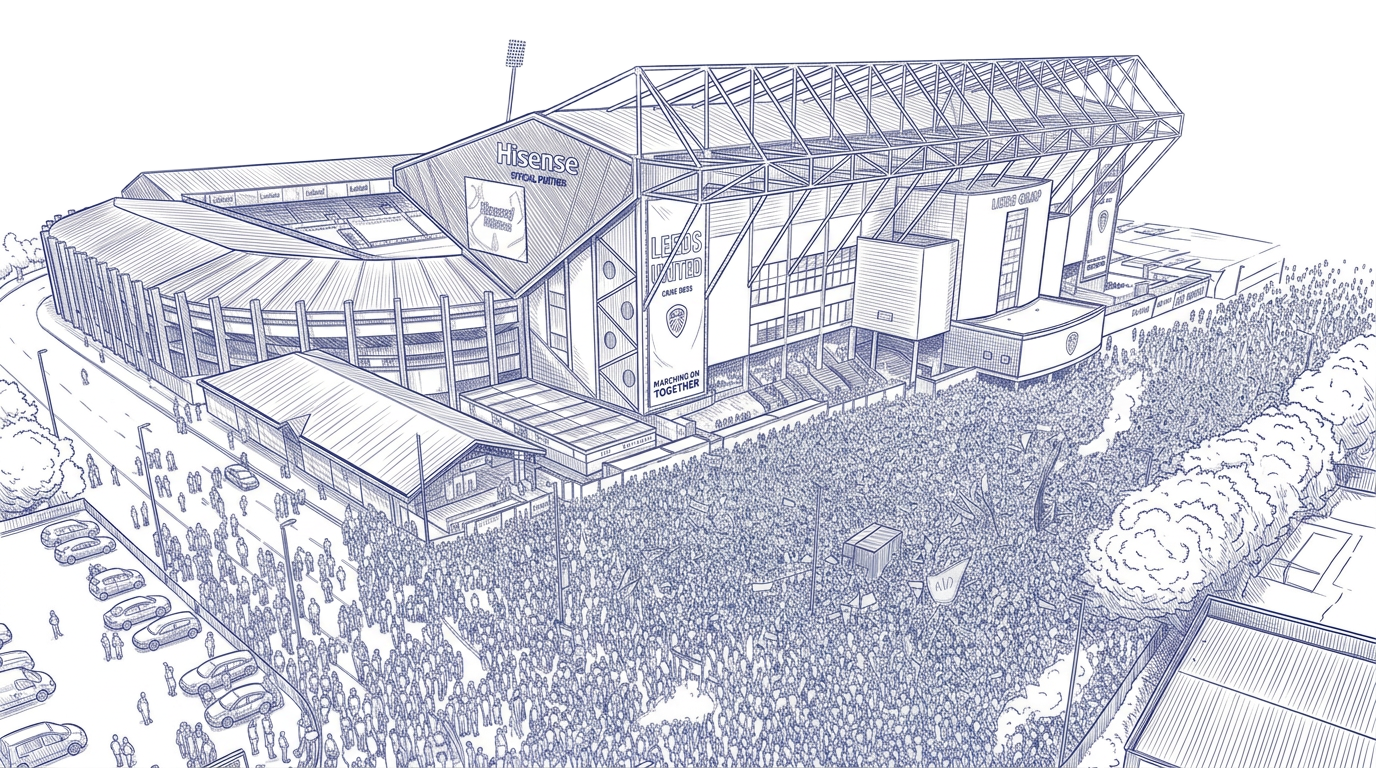
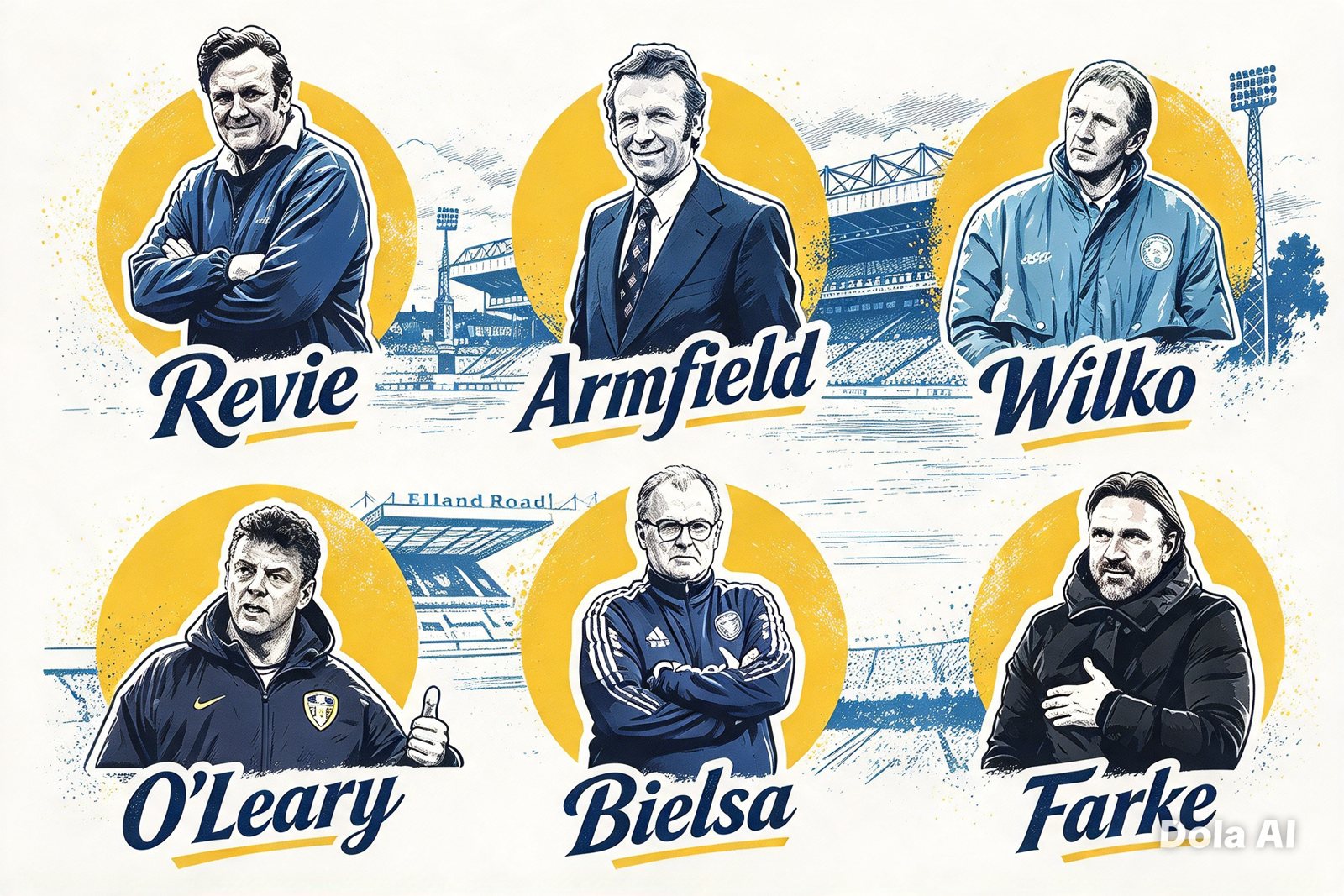
Leeds United’s managerial history stretches from the early Football League years to the modern Premier League. Don Revie remains the benchmark for longevity and honours, but win percentage can tell a different story from trophies, promotions or the quality of the circumstances a manager inherited.
Rank Leeds United managers by win percentage and you quickly discover that football numbers need context. A caretaker who wins one match can sit above a manager who built a promotion-winning team. A coach arriving in a crisis may have a worse record than one inheriting a settled side. A manager may win promotion without having the highest percentage of victories, because draws, points deductions, resources and the division in which the club plays all shape the outcome.
The point of this article is not to reduce Leeds’ managers to a single number. It is to explain how the numbers should be read, identify the leading records in the club’s history and show why the manager archive and comparison tool are useful for exploring the full picture.
For the live version of these figures, use the Leeds Ins & Outs Manager vs Manager tool, which compares results, league finishes, cup runs and players from the site’s own archive. Historical totals can vary between databases because of differences in match coverage, temporary appointments and competition counting, so the table below uses the Leeds Ins & Outs manager records.
How should a Leeds manager be ranked?
Win percentage is wins divided by matches managed, multiplied by 100. It answers a simple question: how often did the manager’s team win? But it ignores draws, the standard of opposition, the division, cup ties, and whether the club’s objective was promotion, survival or a title. It also treats an early caretaker spell and a decade-long reign as if they were equivalent samples unless the number of games is shown beside the percentage.
A useful Leeds leaderboard should show at least games managed, wins, draws, defeats and win percentage. Points per game can add another useful measure, provided it is explicit whether the calculation uses league points only or applies three points for a win to every competitive fixture. Trophies, promotions, highest league finish, and European or cup performance add context that a percentage alone cannot supply.
For that reason, a responsible comparison should distinguish managers with substantial records from interim appointments. A caretaker’s win rate over a handful of games is mathematically correct but tells us very little about what he might have achieved over a season.
The complete win-percentage ranking
| Rank | Manager | Matches | W | D | L | Win % |
|---|---|---|---|---|---|---|
| 1 | Don Revie | 741 | 395 | 197 | 149 | 53.3% |
| 2 | Daniel Farke | 148 | 74 | 42 | 32 | 50.0% |
| 3 | Gary McAllister | 50 | 25 | 8 | 17 | 50.0% |
| 4 | Bob Roxburgh | 10 | 5 | 1 | 4 | 50.0% |
| 5 | David O’Leary | 203 | 101 | 47 | 55 | 49.8% |
| 6 | Simon Grayson | 169 | 84 | 40 | 45 | 49.7% |
| 7 | Marcelo Bielsa | 170 | 81 | 30 | 59 | 47.6% |
| 8 | Garry Monk | 53 | 25 | 11 | 17 | 47.2% |
| 9 | Jimmy Armfield | 193 | 87 | 47 | 59 | 45.1% |
| 10 | Dennis Wise | 69 | 30 | 12 | 27 | 43.5% |
| 11 | Howard Wilkinson | 411 | 178 | 117 | 116 | 43.3% |
| 12 | Thomas Christiansen | 35 | 15 | 6 | 14 | 42.9% |
| 13 | Raich Carter | 217 | 90 | 51 | 76 | 41.5% |
| 14 | Dick Ray | 359 | 147 | 77 | 135 | 40.9% |
| 15 | Billy Bremner | 143 | 58 | 31 | 54 | 40.6% |
| 16 | Jock Stein | 10 | 4 | 3 | 3 | 40.0% |
| 17 | George Graham | 95 | 37 | 27 | 31 | 38.9% |
| 18 | Major Frank Buckley | 224 | 87 | 63 | 74 | 38.8% |
| 19 | Kevin Blackwell | 115 | 44 | 37 | 34 | 38.3% |
| 20 | Terry Venables | 42 | 16 | 7 | 19 | 38.1% |
| 21 | Neil Redfearn | 42 | 16 | 8 | 18 | 38.1% |
| 22 | Brian McDermott | 54 | 20 | 9 | 25 | 37.0% |
| 23 | Steve Evans | 38 | 14 | 12 | 12 | 36.8% |
| 24 | Eddie Gray | 157 | 57 | 55 | 45 | 36.3% |
| 25 | Arthur Fairclough | 309 | 111 | 77 | 121 | 35.9% |
| 26 | Jimmy Adamson | 98 | 35 | 29 | 34 | 35.7% |
| 27 | Jack Taylor | 81 | 27 | 17 | 37 | 33.3% |
| 28 | Dave Hockaday | 6 | 2 | 0 | 4 | 33.3% |
| 29 | Allan Clarke | 84 | 27 | 22 | 35 | 32.1% |
| 30 | Billy Hampson | 231 | 74 | 51 | 106 | 32.0% |
| 31 | Bill Lambton | 33 | 10 | 8 | 15 | 30.3% |
| 32 | Jesse Marsch | 37 | 11 | 10 | 16 | 29.7% |
| 33 | Willis Edwards | 48 | 14 | 8 | 26 | 29.2% |
| 34 | Peter Reid | 22 | 6 | 4 | 12 | 27.3% |
| 35 | Paul Heckingbottom | 16 | 4 | 4 | 8 | 25.0% |
| 36 | Javi Gracia | 12 | 3 | 2 | 7 | 25.0% |
| 37 | Uwe Rösler | 12 | 2 | 6 | 4 | 16.7% |
| 38 | Brian Clough | 8 | 1 | 4 | 3 | 12.5% |
| 39 | Darko Milanič | 6 | 0 | 3 | 3 | 0.0% |
| 40 | Sam Allardyce | 4 | 0 | 1 | 3 | 0.0% |
Win percentage is calculated as wins divided by matches managed and rounded to one decimal place. The ranking includes short caretaker spells as well as long managerial reigns; a small sample can create a misleadingly high percentage, so always read the matches column alongside the rate.
Don Revie: the benchmark above 53 per cent
Revie managed Leeds from 1961 to 1974 and is routinely recorded as the club’s longest-serving and most successful manager. He took over a Second Division club close to the wrong end of the table and built a side that won two First Division championships, the FA Cup, the League Cup, two Inter-Cities Fairs Cups and the Second Division title. The Leeds Ins & Outs archive records 741 matches, 395 wins, 197 draws and 149 defeats, a win rate of just over 53 per cent.
Revie’s figure is remarkable because it sits alongside longevity and silverware. He did not achieve it in a short burst before opponents worked him out. He built a team over years, recruited carefully, developed a strong collective culture and repeatedly kept Leeds near the top of the game. The five First Division runners-up finishes around the title years also matter: his story was not one of effortless domination, but of a team that returned to contention repeatedly until it won.
His achievements should not be romanticised as if every decision worked. Leeds lost major finals and were often controversial. But Revie remains the obvious benchmark because he changed the club’s trajectory and left a team whose influence survived his departure.
Howard Wilkinson: a different kind of restoration
Wilkinson’s Leeds story began in the Second Division. His 1989–90 side won promotion as champions, then finished fourth in the First Division in 1990–91 before winning the title in 1991–92. His managerial record across a long tenure included a reported 43 per cent win rate, but the title is the fact that defines his place in club history.
Wilkinson inherited a club that had lost its place in the top flight and set about rebuilding it with discipline, structure and a clear plan. Gordon Strachan brought leadership, Lee Chapman delivered goals, and young players including Gary Speed and David Batty formed part of a balanced squad. The 1991–92 championship was not merely a good record across matches; it was the culmination of a project that returned Leeds to the summit of English football.
Win percentage would never fully reflect that work. Wilkinson’s teams needed to win promotion from the second tier, survive in the First Division and then finish above the established sides. A manager judged only against Revie on trophies might be unfairly compared with a different task and a different football landscape.
David O’Leary: the academy generation reaches Europe
O’Leary’s Leeds side brought an exciting generation of young players into the first team and reached the Champions League semi-final in 2000–01. The team featured Harry Kewell, Alan Smith, Jonathan Woodgate, Lee Bowyer, Ian Harte and Rio Ferdinand, alongside experienced players and astute recruits. O’Leary is commonly credited with 101 wins from 203 matches, a win rate just under 50 per cent.
The European run and repeated qualification for the Champions League were remarkable achievements, particularly given the club’s history. Yet the same period also illustrates why a win percentage cannot stand in for a full verdict. Expensive recruitment, debt and the consequences of the club’s financial strategy overshadowed the on-field progress. O’Leary’s teams gave supporters some of the best nights of the modern era, while the wider club was moving towards a financial crisis.
Marcelo Bielsa: the manager who changed the club’s emotional temperature
Bielsa’s record at Leeds stands at 170 matches, 81 wins, 30 draws and 59 defeats, a 47.6 per cent win rate in the club’s archive. Those figures do not capture the size of his influence. He transformed how Leeds played, gave the club a clear football identity and took them to the Championship title in 2019–20 after 16 years away from the Premier League.
Bielsa also changed supporters’ expectations of how a Leeds team should play. The pressing, intensity, positional rotations and relentless physical commitment made matches feel like a statement of belief. The team’s return to the Premier League was followed by survival in 2020–21, then a difficult second season amid injuries and a thin squad. The end of his tenure was painful, but his place in the club’s recent history is secure.
Daniel Farke: promotion through resilience
Farke’s Leeds record should be read in the context of two Championship campaigns and a return to the Premier League. The club’s 2024–25 side won 100 points and the title, with 29 wins from 46 league matches, 95 goals scored and only 30 conceded. That team made Leeds champions again after the disappointment of the 2023–24 play-off final.
Other managers whose percentages need a story
Jimmy Armfield took charge after Revie and guided Leeds to the 1975 European Cup final, a result that remains central to the club’s European heritage despite defeat to Bayern Munich. He inherited a difficult transition and helped preserve the team’s competitive standing in Europe.
Billy Bremner, Eddie Gray and Allan Clarke were former Leeds players who later managed the club during difficult periods. Their emotional connection was immense, but loyalty alone could not undo the structural challenges Leeds faced in the 1980s. A short tenure in a declining side can drag down a win rate even when the manager is confronting problems that began long before his appointment.
Simon Grayson helped Leeds return to the Championship in 2010 after the club had fallen into League One and lost 15 points at the start of the season. Garry Monk’s side finished seventh in 2016–17, the club’s strongest league finish for years, but fell away the following season. Thomas Christiansen, Paul Heckingbottom and the managers of 2022–23 all worked in circumstances that changed rapidly around them. Their win percentages are a starting point for analysis, not the whole verdict.
Temporary managers can also distort the top of a ranking. One win from one match produces a 100 per cent success rate. Six wins from ten games produces 60 per cent. Neither necessarily indicates the stronger long-term manager, which is why the games column matters as much as the percentage.
How to explore the full Leeds United manager record
The Leeds Ins & Outs Manager vs Manager tool lets you go further: compare Revie with Wilkinson, Bielsa with Farke, or O’Leary with Armfield, side by side.
So who is Leeds United’s best manager by win percentage? The answer depends on how the list is defined and whether very short spells are included. Who is the most influential? That is a different question. Revie’s longevity and honours make him the benchmark; Wilkinson restored the club to the top; O’Leary gave Leeds a European adventure; Bielsa changed the modern club’s identity; and Farke delivered the latest Championship title. The numbers help us compare them. The stories explain what those numbers mean.
Sources
Leeds Ins & Outs Manager vs Manager · Leeds United Historical Archive managers · Leeds United official honours