
News
Leeds United 1–1 Juventus, 1971: The European trophy won on away goals
An abandoned first leg, a replay in Turin and a tense draw at Elland Road: Leeds United won the 1971 Fairs Cup final on away goals to claim their second European trophy.

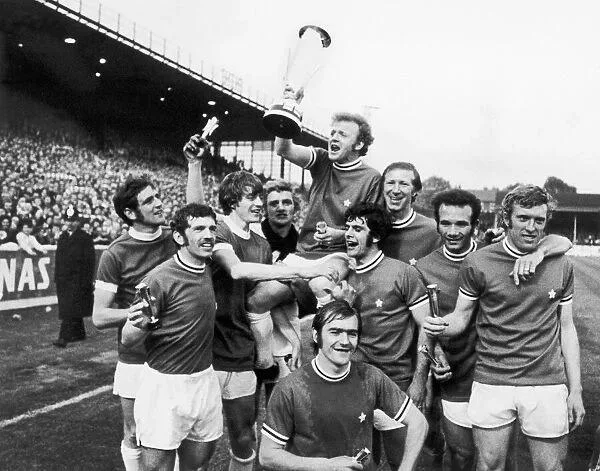
The European trophy won on away goals
Leeds and Juventus played out a dramatic, rain-interrupted Fairs Cup final in which a 1–1 draw at Elland Road completed a 3–3 aggregate score. Leeds won on away goals, claiming their second European trophy and showing Revie's team could survive the most uncomfortable nights as well as dominate them.
European finals rarely follow a convenient script. Leeds United's 1971 Inter-Cities Fairs Cup final against Juventus began with a match that had to be abandoned, continued with a replay in Turin and ended at Elland Road with a result that was enough for Leeds but hardly left the supporters in comfort.
The scheduled first leg in Turin on 26 May 1971 was abandoned after 51 minutes with the score still 0–0 because torrential rain had left the pitch waterlogged. The fixture was rearranged for two days later. Juventus and Leeds played again, this time completing a 2–2 draw. The tie was level, with the second leg at Elland Road still to come.
Juventus were one of Italy's major clubs and the pressure on Leeds was considerable. Revie's team had already established itself in England and had won the Fairs Cup in 1968, but European football is often less forgiving than a domestic campaign. Away goals, travel, unfamiliar opponents and the knowledge that a single mistake can undo an entire season all make a two-legged final a special form of pressure.
At Elland Road on 3 June, Leeds took the lead, but Juventus equalised to make it 1–1 on the night. The aggregate score was 3–3. Under the rules in use, Leeds were awarded the trophy on away goals. It was a narrow margin, but the rules were clear and the club had done enough over the two matches that counted.
The final was a test of nerve as much as quality. Leeds had to absorb the tension of an abandoned fixture, return to the contest after a replay and then protect a result under the knowledge that one Juventus goal could change the balance. The side's familiar strengths were vital: the leadership of Billy Bremner, the defensive resilience of Jack Charlton and Norman Hunter, the intelligence of Johnny Giles and the threat provided by Peter Lorimer and Mick Jones.
It was also a reminder of Revie's meticulous approach to competition. His teams were renowned for preparation and structure, and the European campaigns asked players to follow the plan in conditions that were often unfamiliar. Leeds could be direct and physical, but they were also tactically aware and able to alter their approach to suit a tie. Against Juventus, the final score did not tell the whole story. The club had to navigate three match occasions, including the abandoned game, before the trophy was settled.
The 1971 Fairs Cup triumph was Leeds' second European title in three years. The competition itself was approaching the end of its life: the Inter-Cities Fairs Cup was replaced by the UEFA Cup from the following season. Leeds therefore became one of the last winners of a tournament that had helped establish the club's European reputation.
For supporters, the trophy was another answer to the frustration of league near-misses and cup final defeats. Leeds could win abroad, against established European opposition, in circumstances that tested their patience and their nerve. The 1968 win over Ferencváros had announced their arrival; the 1971 win over Juventus confirmed they were not a one-off success.
A 1–1 draw can look like a modest result on paper. In a European final, over two nights and an abandoned first attempt, it was enough to crown Leeds champions. The trophy went to Elland Road because Revie's side had found a way through every complication the tie could offer.