
News
Leeds United 1–0 Ferencváros, 1968: The night Leeds took their first step towards European glory
Leeds' first major European trophy came through a 1–0 first-leg win over Ferencváros and a tense goalless draw in Budapest. Mick Jones's goal made the difference.

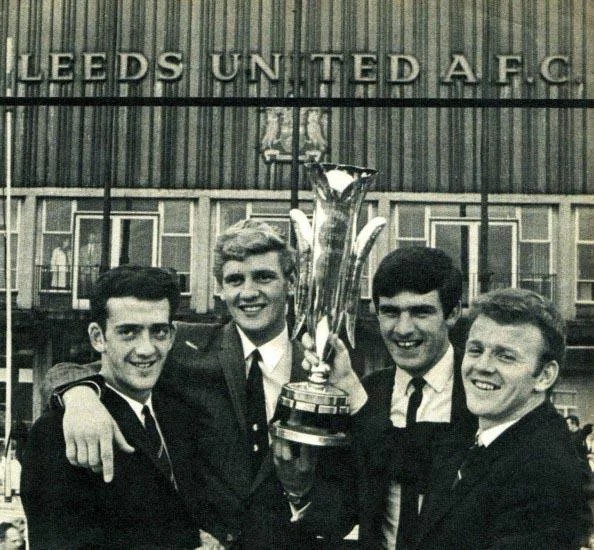
The night Leeds took their first step towards European glory
Mick Jones's goal at Elland Road gave Leeds a narrow advantage in the Inter-Cities Fairs Cup final. A goalless return in Budapest completed the job and delivered the club's first major European trophy.
European football can make a club feel larger than its domestic standing. It takes a team out of its familiar routines, tests it against different styles and asks it to perform in places where the crowd, the language and the atmosphere belong entirely to somebody else. By the summer of 1968, Leeds United were ready for that challenge. They had already won the League Cup and were becoming a force in the First Division. The Fairs Cup final against Hungary's Ferencváros offered the opportunity to establish themselves beyond England, too.
The first leg took place at Elland Road on 7 August 1968. The attendance was lower than might be expected for a European final, with the match televised live, but the stakes were enormous. Ferencváros were an experienced and technically capable side, and the tie would not be settled in one evening. Leeds needed an advantage, not a performance for the scrapbook.
The decisive moment arrived in the 41st minute. Peter Lorimer delivered a corner, Jack Charlton challenged in the crowded penalty area and the ball broke for Mick Jones, who forced it over the line. Ferencváros protested about the challenge on goalkeeper István Géczi, but the goal stood. It was a scrappy goal by the standards of the spectacular moments later associated with Leeds, but finals are rarely concerned with aesthetics once the ball crosses the line.
The second half was uncomfortable. Ferencváros created opportunities to equalise, and Leeds goalkeeper Gary Sprake had to remain alert as the Hungarian side pressed. Leeds left Elland Road with a 1–0 advantage, but there was still another match to survive.
The return leg in Budapest on 11 September was a very different test. The second leg had been delayed, and the political atmosphere in Eastern Europe had become more tense following the Warsaw Pact invasion of Czechoslovakia. A crowd of tens of thousands filled the Népstadion, and Ferencváros attacked with urgency. Leeds defended deep and in numbers, knowing that a single goal would take the tie into uncertain territory.
Revie's side held on. The final ended goalless in Budapest, giving Leeds a 1–0 aggregate victory and the first major European honour in the club's history. Revie later described the closing minutes as seeming to last an age. Those are the words of a manager who knew a final could turn on one mistake, one rebound or one moment of panic.
The victory mattered because it added a new dimension to Leeds' growth. The League Cup had demonstrated that the team could win domestically. The Fairs Cup proved that Leeds could compete abroad and manage a two-legged final under intense pressure. It also helped establish the European nights that would become part of the club's identity: the travel, the hostile crowds, the tactical battles and the sense that Elland Road was no longer the limit of Leeds' ambitions.
Mick Jones's goal is not remembered with the same cinematic clarity as Allan Clarke's FA Cup header four years later or Peter Lorimer's strike in Barcelona in 1975. It deserves its place all the same. Goals that win trophies are allowed to be untidy. The final was about more than the finish; it was about defending the advantage, trusting the system and travelling home with silverware.
Leeds would win the Fairs Cup again in 1971. By then, Revie's side had become one of the most formidable teams in Europe. But the first European trophy had to come from somewhere. It began with a corner, a crowded penalty area and Mick Jones making sure the ball crossed the line.