
News
Bournemouth 0–1 Leeds United, 1990: The Chapman goal that took Leeds back to the top flight
Leeds needed one final victory at Dean Court. Lee Chapman supplied the decisive goal, securing the Second Division championship and ending eight years outside the top flight.

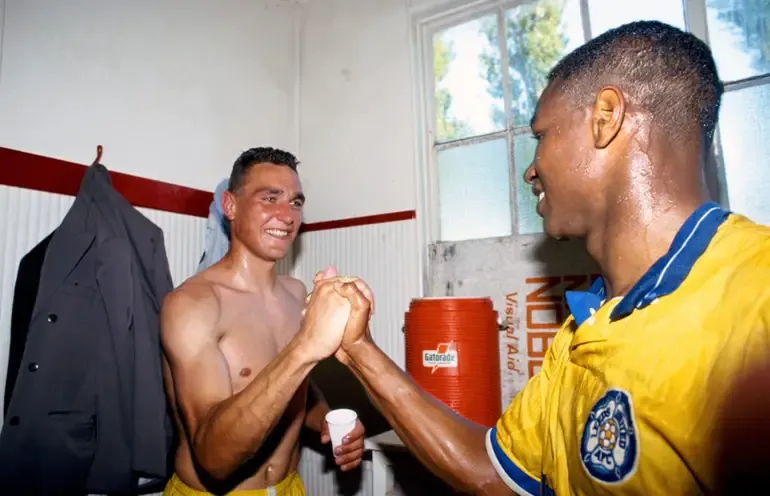
The Chapman goal that took Leeds back to the top flight
After eight years outside the top flight, Leeds arrived at Dean Court knowing exactly what was required. Lee Chapman's goal secured the win, the Second Division title and promotion, completing Howard Wilkinson's first great task at Elland Road.
By the time Leeds United arrived at Dean Court on 5 May 1990, the arithmetic was brutally simple. Win, and Leeds would be champions of the Second Division and back in the First Division after eight years away. Anything else would leave the season and the club's future hanging in uncertainty. The team had come too far for a final-day failure to be anything other than devastating.
Leeds' relegation in 1982 had been the beginning of a long decline. The club that had once challenged for league titles and European trophies had become stuck in the second tier, with successive attempts to find a way back ending in disappointment. The 1987 play-off defeat to Charlton had been especially painful: Leeds had been minutes away from promotion before losing in extra time. When Howard Wilkinson arrived in 1988, he understood that the club needed structure, resilience and a clearer plan.
Wilkinson set about rebuilding the side around a mixture of experienced professionals and younger players. Gordon Strachan arrived from Manchester United and became captain. Vinnie Jones added bite to midfield, while Lee Chapman offered a focal point in attack. Gary Speed and David Batty were among the younger players who would later become crucial figures. The squad had character, but it also had organisation. Leeds were being built to win a long season, not simply to win a few headline matches.
The final stretch had been tense. Leeds had looked well placed, then allowed the nerves to surface and dropped points. Their 4–0 victory over Sheffield United helped restore authority. A 2–1 home win over Leicester, secured by Strachan's late goal, left Leeds top heading into the decisive fixture. Now there was no further opportunity to repair a mistake. The job would be completed at Bournemouth, or it would not be completed at all.
The match was never likely to become a free-flowing celebration. Bournemouth had a contest to play, and Leeds had the burden of expectation to carry. Every minute that passed without a goal made the outcome feel heavier. For the travelling supporters, all the years of second-tier football were compressed into one afternoon. The prospect of a return to the First Division was close enough to imagine and too precious to take for granted.
Then came the decisive moment. Lee Chapman scored the only goal of the game, giving Leeds the 1–0 victory they needed. It was not a complicated result to explain, but it had taken years to earn. The final whistle confirmed Leeds as Second Division champions and sealed promotion. Strachan had led them out, Chapman had supplied the goal, and Wilkinson's first major objective at Elland Road was complete.
The celebrations that followed were more than relief. They were the release of a club and a support that had been carrying the memory of a different Leeds for too long. The old achievements had not guaranteed a quick return; the club had to build a new team in the conditions of its own time. For the first time since 1982, the First Division was no longer a distant recollection. It was the destination of the next season.
The 1990 promotion also mattered because it was a beginning, not an ending. Leeds were not returning simply to survive. Wilkinson had already built a team that finished fourth in its first season back, then went on to win the First Division title in 1991–92. The foundations of that championship were laid in the Second Division, through the habits and standards forged in the promotion campaign.
Chapman's goal at Bournemouth remains the obvious image of the day, but the broader story belongs to the whole rebuilding project. Strachan's influence, Wilkinson's discipline, the contributions of players who had endured the hard years and the supporters who followed Leeds through them all were part of the same result. Promotion was decided by a single goal; the journey to it had been much longer.
In the history of Leeds United, not every title is a top-flight title, and not every decisive match ends in a trophy ceremony. But this was one of the club's great turning points. Leeds were back where they believed they belonged, and a season that could easily have become another story of near-misses became the first chapter of an extraordinary return.